
The end of the year is a great time for reflection. Here’s what our colleagues have been thinking lately and see as shifts and trends in 2026.
“Newsrooms will finally learn that AI doesn’t do journalism.”
Ali Mahmood
Digital News Strategist

Many news organizations are facing disillusionment with AI projects that failed to boost either business or journalism, prompting a strategic shift. The surviving newsrooms will move away from “solutions looking for problems” and focus on three human-centric pillars: Original human insight (reporter-driven investigation), authentic audience engagement (relationship-building over clicks), and infrastructure (building data foundations to understand readers). This marks a shift from asking “What can AI do?” to building quality journalism supported by controlled technology and well-understood audiences.
Related article
“First-party data comes into focus, for real this time.”
Eva Szamelova
Publisher Revenue Strategist

All year long, I kept hearing from publishers and agencies that they were going to focus on first-party data in the near future. The death of third-party cookies is no longer news, but many publishers still haven’t made the strategic shift this change demands. First-party data, the information you collect directly from your audience through registrations, subscriptions, and on-site behaviour, is a very valuable asset. You’re not dependent on platforms or intermediaries that can change their rules overnight.
Brands increasingly want to reach verified, engaged audiences rather than probabilistic segments. Publishers who can offer authenticated user data and contextual targeting command premium CPMs. Understanding what your actual audience reads, shares, and pays for beats guessing based on aggregate industry trends. These insights shape a better content strategy. Subscription products, events, newsletters, and memberships all depend on knowing who your audience is and what they value.
Related article
“Back to basics. Direct audience revenue is not rocket science.”
Tomas Veress
Chief Technology Officer

My colleagues know I don’t like to dance around things, and I will be brief. I spent hundreds of hours on calls with publishers and their audience revenue teams this year. The biggest needs are the same across many, many of them – creating an offering that works for the audience, ideally based on audience research.
We all know the basics: start with high-quality content, get to know your audience, and offer news products that create habits (such as newsletters, podcasts, mobile apps, and events). Then build funnels that convert audiences into paying subscribers. Identify the best-performing ones and double down on those. Keep refining your offering to retain subscribers and keep churn below 5%. That is the known part.
The unknown and more difficult part is finding out what works best for your audience. Luckily, there are tools and platforms (shoutout to REMP) that help with this. Those who will put in the work and focus on these basics will be better positioned in 2026.
Related articles
“Hard paywalls go soft.”
Dominik Blizman
Adtech Visionary & Performance-Driven Strategist

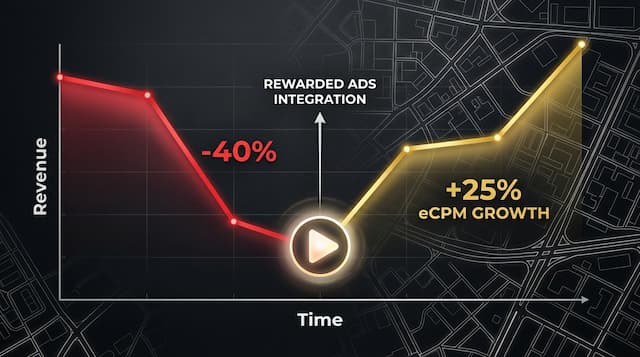
In 2025, we ran multiple experiments with publishers of various sizes in different markets to determine what kind of monetization can sustainably coexist between the ad and direct monetization spaces. We have all seen ideas like micropayments or unskippable ads. They worked to some extent, but none proved to be an ideal strategy. FatChilli has tested a new format called rewarded ads for web with publishers across many markets to find out whether a soft lock based on rewarded ads for web could become a viable option for those of your readers who are not ready to pay or will never pay, but might spend a couple of seconds to voluntarily (!) watch an ad.
How does it work? Instead of putting the content behind a hard paywall where you have to pay for a subscription, you change your lock screen into an opt-in offer to watch an ad in exchange for unlocking the content for the entire session. No money changes hands on either side; the reader merely contributes time and attention to an ad, and the publisher reaps the rewards, which are significantly higher than your regular ad format.
Feedback from publishers has been very positive from publishers that tried this solution, and we are going to be pushing the format even further with more sophisticated segmentation in 2026. If you realize that most of the audience will never get a news subscription, the need to find better alternatives to paywalls and regular display ads alike is vast, and the potential return on finding the right solution is really high. We think we found it and would love for more publishers to try this.
Related articles
“Less is more, and print is still not dead.”
Andrej Kosnac
Lead REMP Integrator

Publishers sometimes lean too heavily into the demands of a vocal minority. It is a mistake we all make from time to time. Especially in 2026 and onwards, it is going to be more and more important to just keep it simple. After nearing bankruptcy in 2003 due to over-diversification into theme parks and jewelry, LEGO staged a historic turnaround by ruthlessly divesting from non-core assets and returning to the “power of the brick.” Under new leadership, the company halved its unique parts catalog to simplify manufacturing and implemented a strict 13.5% profitability benchmark for every new product line. By refocusing on its core identity and collaborating with its global fan base, LEGO transformed from a failing toy maker into the most profitable company in its industry.
There is a lesson there also for publishers. And for some, the near future might not be purely digital. We have seen publishers developing products and bundles that also heavily rely on print because their audiences want it. For some publishers, print is still driving meaningful revenue. Just take The Atlantic, the print magazine has returned to publishing 12 issues a year instead of 10, a schedule it had maintained since the early 2000s. Atlantic’s CEO even said in an interview that they view print as a very good hedge against over-dependence on technology platforms and AI.
Related article
“Independent publishers will lead the next growth cycle.”
May Benmoussa
Partnerships & Senior Account Manager

In 2026, independent publishers will no longer be playing catch-up with large media groups. They will be setting the pace. With the right partners, they will be able to arm themselves with mature subscription strategies, flexible access models beyond traditional paywalls, and a sophisticated use of first-party data.
The most successful publishers will diversify revenue well beyond subscriptions, combining reader revenue with non-intrusive, value-based advertising formats that respect the user experience. As platform dependency continues to decline, publishers that own their audience, their data, and their monetization strategy will be best positioned to scale sustainably on their own terms.
Related article
“Let’s focus on how video can help conversions.”
David Tvrdon
Audience Revenue & Engagement Expert

There is no avoiding it. 2025 has been a revolutionary year in that video has overtaken text in some markets as the primary format of consuming news (based on the Reuters Institute’s Digital News Report). I suspect 2026 is going to continue with this trend. I was never the one to dismiss what audiences want, and increasingly, it is video. And even though I might not like it (more of a podcast and newsletter consumer myself), it is the reality we are living and publishers need to adjust. And many have. But for most, video is mostly a brand-building exercise, in that it does not drive direct revenue. Well, video ads do, but I am not talking about solutions like the FatPlayer.
Despite Netflix’s push to get HBO Max and possibly jump YouTube in time spent, this will likely not happen in 2026. Which means YouTube will continue to dominate. Maybe publishers can take a page from podcasters who have been setting up parallel memberships on YouTube that copy some of the features they have in their regular offering. Of course, keeping in mind that YouTube does not offer any direct relationship with your paying members (!). It is a walled garden in the end.
The whole market is trying to figure out how to play within these rules and build a sustainable revenue stream outside of ads. I wish I could offer a definitive answer to the ultimate question – how to use video for conversions, but I don’t know. Though I am hopeful publishers will increasingly find ways to dance between the rules of the platform and the logic of direct audience revenue.
Related article
“Focus on what works and keep it simple.”
Matej Borko
Chief Product Strategist and FatChilli Co-Founder

The most successful media strategies of the coming year won’t come from chasing the latest AI tools or trying to replicate what The New York Times is doing. They’ll come from publishers who resist the urge to overcomplicate things and instead double down on what’s already working for their specific audience. Too many newsrooms are still looking at the Times as a north star, but this comparison leads nowhere useful. The Times operates in a different universe with different resources, audience expectations, and revenue streams. A regional publisher or niche outlet trying to copy their playbook is like a local restaurant studying McDonald’s supply chain logistics.
The real winners will be those who audit their existing operations honestly. Which stories drive the most engagement? Which revenue streams are actually growing? Which audience segments are most loyal? The answers are usually hiding in plain sight. Simplicity is underrated. Fewer initiatives executed well will outperform a scattered portfolio of experiments. The media organizations that thrive will be those disciplined enough to say no to distractions and yes to the boring, incremental work of serving their communities better.
Related article
“Forget a pure advertising play. Diversification is your secret weapon.”
Jaroslav Janko
Chief Executive Officer

The publishers who win in 2026 won’t be the ones with the biggest budgets. They’ll be the ones who treat their audience as co-owners of the mission. Community-backed revenue, whether through memberships, subscriptions, or donations, is the way forward for independent outlets, not just a pure advertising play. The best-positioned organisations are going to be the ones that diversified their revenue streams well enough, rely more on direct audience revenue, and own their tools and platforms.
Related article
Enjoyed the post? Share it.

FatChilli helps publishers turn audiences into revenue.