

(Photo: AI-generated)
Publishers are struggling with platform crises, traffic decline, and expensive tech. REMP provides an integrated, open-source solution for reader engagement and subscription revenue.
Key takeaways
- Platform traffic is collapsing. Google search referrals to publishers fell 33% globally in the past year, Facebook referrals dropped 43%, and small publishers saw a 60% decline in search traffic overall. The era of borrowed audiences is ending.
- Subscriptions are the stated priority, but the tools don’t match. 76% of publishers call reader revenue their top strategy, yet most rely on fragmented, expensive tech stacks that can’t connect analytics, email, paywalls, and CRM into a single reader view.
- REMP offers an integrated, open-source alternative. Built by the co-founder of Piano and battle-tested at Denník N (75,000 subscribers), REMP gives publishers a unified platform they own: analytics, email, campaigns, paywall, and CRM, at a fraction of the cost of proprietary solutions.
Owning your audience with a direct line of communication has never been as important for publishers as it is today.
News publishers that understand what it means to have a relationship with their audience, and that there is no single audience, have invested in creating their own platforms, owning the data, and building user habits.
At the surface, it might seem that it is enough just to set up a newsletter, start registering new users, and come up with three subscription tiers and target the right groups of audiences.
In reality, these are the tools and features, but it matters which tools you are using to reach and engage your audience. Because they can either accelerate you or hinder your growth.
Subscribe to our newsletter for more publisher stories and strategies straight into your inbox.
External traffic keeps falling
According to the Reuters Institute’s 2026 Media Trends Report, Google search referrals to publishers fell 33% globally, while Facebook referrals dropped 43% and X/Twitter referrals fell 46% over two and a half years.
Only 38% of the surveyed editors and CEOs expressed confidence in journalism’s future, a whopping 22-percentage-point collapse since 2022.
Meanwhile, 76% of publishers name subscription and membership revenue as their top strategic priority. Yet the tools available to pursue that strategy are either expensive and proprietary or fragmented across disconnected systems.
Publishers that built their businesses on platform traffic face a structural decline, think BuzzFeed or Vice Media. Some of that generation, like Business Insider, have gone through a transformation and note that traffic is actually growing.
“Our newsroom has moved away from aggregation, and more than 80% of what we publish is now exclusives, scoops, and original reporting,” BI has recently announced.
In other words, the newsroom has followed a tactic publishers like Denník N, The New York Times, The Guardian, and others, often cited as industry leaders, adopted a while ago.
Another, more recent report from Axios citing Chartbeat data, showed that over the past two years, referral traffic from traditional search engines has declined by 60% for small publishers, compared with 47% for medium-sized publishers and 22% for large publishers.
At the same time, Axios reported, traffic from AI-driven search experiences and chatbots isn’t close to offsetting declines from traditional search.
So, what are smart publishers doing differently?
Conversion rates are brutal

The mathematics of the subscription funnel are unforgiving. INMA’s (International News Media Association) Q4 2024 benchmarks put the median monthly digital subscription churn rate at 4.6% for national news brands globally.
At that rate, a publisher replaces nearly half its subscriber base every year just to stand still.
“While breaking news might drive subscription spikes, it’s the daily habit-forming content that builds lasting relationships and keeps the subscribers coming back,” wrote in his analysis of the data Greg Piechota, Researcher-in-Residence for INMA.
According to an often-cited 2022 study of 166 publishers by INMA, the median publisher had a conversion rate of 0.6%. And taking into account just the top quarter of news brands, the average would jump to 1.4%.
Denník N, for example, has an overall conversion rate of almost 6%, meaning how many subscribers it has relative to its monthly unique visitors.
Piano’s 2024 benchmarks show that the average conversion from registered user to subscriber is around 19%. The New York Times reportedly sees that registered users are 40x more likely to convert to paying customers.
In 2020, The New York Times reported that their average conversion rate ranged between 0.1% and 0.15% and hasn’t moved much since 2017.
Which brings us to another industry wisdom: much of your audience (think more than 90%) will likely never opt in for regular paid support.
Another takeaway from successful publishers: they are more likely to use dynamic paywalls than not. That means you have to identify those who have a strong affinity for your brand and are most likely to subscribe.
This is where REMP’s (Readers’ Engagement and Monetization Platform) integrated approach starts to matter.
The platform’s Campaign module supports metered, hard, and dynamic paywalls that can be configured by editorial and product teams without developer involvement.
Paywall aggressiveness adjusts based on RFV (Recency, Frequency, Volume) segmentation scores that Beam, REMP’s analytics engine, calculates in real time.
A casual visitor might see a soft prompt. A reader who has consumed five premium articles in three days with 70–90% scroll depth sees a hard paywall.
Different offers can be A/B tested across segments (pricing, messaging, trial length, annual versus monthly positioning) with conversion measured end-to-end.
Miran Pavić, CEO of Croatia’s Telegram.hr (now Presshaus publishing house), adopted REMP after not finding a match for their needs in a larger proprietary platform, and the result was 54% growth in subscription revenue in 2025.
“Not counting our first year a decade ago, it was our best year,” Pavić told us in January 2026.
Critically, Pavić described how the platform’s lifecycle tools helped with the churn side: “People who churned after the initial promotional campaign ended remained as registered users and started using the site more. Some of them we were able to convert back to paying customers with additional promotions later down the line.”
Telegram.hr charges €9.99/month, the most expensive news subscription in Croatia, and grew subscribers 66% year-over-year.
“It just takes a lot of time. You really have to find a way to emotionally and functionally appeal to the audience,” Pavić explained.
Related articles
Pageviews measure the wrong thing when subscriptions pay the bills

BEAM+ Newsroom Analytics — engagement score, quality reads, RFV score, pageviews
The shift from advertising-dependent to reader-revenue businesses has exposed a fundamental analytics gap. Chartbeat research found that 54% of pageviews receive less than 15 seconds of attention.
Medill’s Spiegel Research Center, analyzing 13 terabytes of US newspaper data, found that regularity of visits was a far better predictor of subscriber acquisition and retention than raw pageview counts or session duration.
Most publishers still rely on Google Analytics as their primary intelligence layer, a tool designed to measure traffic acquisition rather than reader value.
As Ricky Sutton of Future Media put it: “Pageviews only matter if you can sell ads, and Google, Meta, Amazon, and Microsoft now have all the ads, so pageviews are not a measure of economic success.”
REMP’s Beam analytics engine was built specifically to answer a different question: which content converts readers into paying subscribers?
Where Google Analytics tracks sessions and bounce rates, Beam tracks revenue attribution, i.e., conversion rates per article, revenue generated per piece of content, conversion attribution by author, section, and tag.
What makes Beam even more appealing is that you own the data, the tagging works on a much deeper level, and you can personalize what you want to track.
FatChilli has built Beam+ as a layer on top of Beam analytics to go even further.
Beam+ provides editorial and business teams with insight into content that builds loyalty. Every article gets a clear recommendation: replicate, optimize, amplify, or move on.
Beam+ also shows you engagement scores, RFV (Recency, Frequency, and Value) analysis, AI traffic visibility, and much more.
Tomáš Bella, Denník N’s co-founder and the architect of REMP, explained the philosophy: “When we were starting, the world was still mostly living in the pageviews and advertisement era. But when you care about pageviews, that leads to clickbait. We want to look at subscription sales because it fits better with journalistic values.”
Denník N sends daily reports to journalists showing which articles drove the most subscriptions, not which generated the most clicks.
That editorial feedback loop, connecting journalism quality to business outcomes, is built into Beam’s reporting by default. The newsroom now has 75,000 paying subscribers, with 70% of revenue coming from subscriptions, making it the largest newsroom in Slovakia.
Those emails to journalists are automated and sent using Mailer, REMP’s advanced email marketing.
Related articles
Email: the underused engine for subscription growth

REMP Mailer
Publishers sit on one of their most powerful conversion assets, the email newsletter, yet most operate it with tools designed for e-commerce marketers, not newsrooms.
As mentioned above, known users (including newsletter subscribers) convert to paying readers at significantly higher rates than anonymous visitors.
Yet most publishers still treat newsletters as an editorial afterthought managed through generic ESPs (Email Service Providers) that charge escalating per-contact fees and seldom offer deep integration with subscription data.
The cost problem alone is significant. Mailchimp’s pricing has risen 20–30% since Intuit’s $12 billion acquisition in 2021. The free tier shrank to just 250 contacts, and Mailchimp charges for unsubscribed contacts, which leads to higher prices.
SendGrid retired its free plan entirely in May 2025. Mailgun doubled its flex pricing in December 2025.
But beyond cost, the deeper problem is data fragmentation: none of these platforms natively understands whether a newsletter recipient is a paying subscriber, a lapsed trial user, or a high-propensity prospect who should see a conversion prompt instead of a paywall teaser.
REMP Mailer is the email and newsletter management module built into the platform. It’s ESP-agnostic by design. Publishers can connect SendGrid, Mailgun, Amazon AWS, or any other provider without losing their templates, subscriber data, or automation logic.
Mailer ships with automated newsletter builders and an article locker system that mirrors website paywalls inside the newsletter itself. That means paying subscribers see full previews, non-payers see conversion prompts within the same send.
On top of manual newsletters, most REMP users also send hundreds of automated newsletters. Denník N, for example, organises automated newsletters by category or author.
The Scenario Builder connects Mailer to REMP’s CRM for lifecycle automation: onboarding sequences, pre-expiry retention emails, win-back campaigns, and payment failure recovery.
Everything is triggered by subscription events and targeting users based on their real-time RFV segment. This closes the 90-day churn window where, per INMA data, nearly half of all subscription cancellations occur.
The tech stack tax hits mid-size publishers hardest

The median enterprise now uses 130+ marketing technology tools, according to Adobe. Scott Brinker’s 2025 Marketing Technology Landscape counts 15,384 solutions, a 100-fold increase since 2011.
For publishers specifically, the fragmentation problem compounds: a typical mid-size newsroom might run separate systems for its CMS, paywall, CRM, email marketing, analytics, ad serving, and audience segmentation, with limited data flowing between them.
The enterprise alternatives are real but expensive. Proprietary customer experience platforms start at $5,000 per month and scale with bandwidth and contributors. That puts them out of reach for most mid-size publishers.
Vendor lock-in compounds the cost problem. Proprietary platforms control publisher data, limit customization, and can raise prices with limited recourse.
Florian Jungnikl-Gossy, Chief Product Officer at Austria’s Falter magazine, described the dynamic plainly after switching to REMP: “We had three or four different solutions. What is great about REMP is the pricing. It’s not the classic software-as-a-service approach where every year they say, ‘Oh, this year 10% more, next year 15%,’ and then scrap two features that are central to your work because they think they know better.”
REMP’s architecture is a direct counter to both problems. It ships as a single integrated stack: CRM, analytics (Beam), email (Mailer), on-site campaigns (Campaign), paywall tools, and SSO; all built to work together natively.
All modules share a unified reader profile. The CRM functions as a customer data platform with dynamic behavioral segmentation, subscription lifecycle management (purchase through cancellation and win-back), automated marketing scenarios triggered by reader behavior, and retention cohort analysis.
The Google News Initiative reported that REMP costs 4 to 10 times less to implement than comparable proprietary solutions. Pavić of Telegram.hr confirmed: “REMP offered 90% of other solutions for a fraction of the price, and let us customize.”
Peter Mačinga, Board Member and CDO at Petit Press (publisher of Slovakia’s SME.sk, reaching 2.6 million monthly users), chose REMP for exactly this reason: “We needed an all-in-one subscription system adaptive to our needs. Open-source and extensible so our developers can add new functionalities.”
Rewarded ads as a bridge for the gap between ads and paywalls

One of the most stubborn problems in news monetization is the gap between the large anonymous audience that generates ad revenue and the much smaller paying subscriber base.
For publishers in markets with low willingness to pay or with audiences not yet used to paying for online news subscriptions, there has been little they could do to address the gap between paying and not paying, yet earning enough advertising revenue.
FatChilli has developed a rewarded-ads module called Wonderwall that reframes this choice.
Instead of pay-or-leave, readers encounter three options: watch a short video ad for session access, register with an email address, or subscribe.
Different options surface for different segments. Google Discover visitors, who rarely convert, see the rewarded ad option prominently; returning high-engagement readers see subscription CTAs.
The concept acts as a monetization bridge: readers who aren’t ready to subscribe still generate revenue at eCPMs typically exceeding €30, while building familiarity with the content’s value.
The Shift News, an investigative news platform from Malta, pioneered a ‘soft lock’ strategy using rewarded ads to boost revenue by 68%, all without gating their investigative journalism behind a paywall.
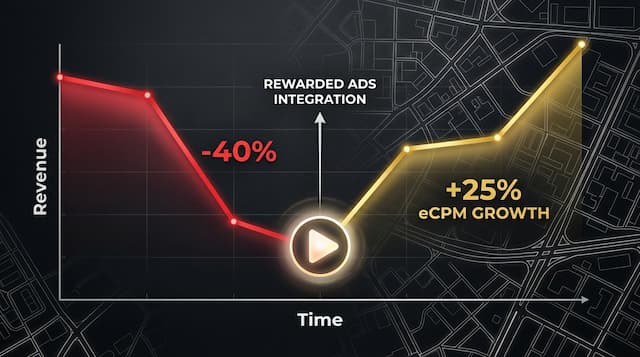
Parameter, a regional Slovak news outlet, deployed rewarded ads through FatChilli and saw 25% eCPM growth and 26% overall revenue growth.
The broader principle matters more than the specific tactic. When all modules share a unified data layer — when the CRM knows which readers watched rewarded ads, the analytics engine knows their engagement depth, and the campaign tool can target accordingly — the entire funnel from anonymous visitor to paying subscriber becomes visible and optimizable.
This integrated intelligence is what fragmented tool stacks cannot deliver. And yes, many platforms on the market solve this problem, but very few you can say you own and would be able to maintain if the company disappeared tomorrow.
With REMP, this is not the case, as it is open source; you own the code, the platform, the data, and your audience relationships.
Why a publisher-built, open-source approach matters now
The structural forces hitting news publishers in 2025 and 2026 are not temporary disruptions.
Traffic dependency on platforms is in irreversible decline. AI is simultaneously compressing advertising revenue and disintermediating search.
The Reuters Institute data shows 62% of publishers cite lack of resources as their top innovation barrier, with 53% pointing to skills gaps and 48% to internal misalignment.
These constraints make it impossible for most newsrooms to build proprietary technology from scratch, yet the enterprise alternatives lock publishers into expensive dependencies with vendors whose incentives may not align with editorial independence.
REMP exists because Denník N and Tomáš Bella, who co-founded Piano Media, the very paywall company that became the industry’s dominant proprietary provider, saw this structural problem from both sides and chose to build the alternative as open-source software under an MIT license.
“For many years, publishers were very good in journalism and very bad in technology,” Bella said in a recent interview. “We see REMP as a way publishers can pool their resources so that we can compete on the quality of our journalism without everyone having to develop their own marketing automation.”
The platform has now generated over €40 million in reader revenue across publishers in more than a dozen countries.
The question for publisher executives is not whether they need an integrated reader-revenue infrastructure (76% already say subscriptions are their top priority).
The question is whether that infrastructure should be owned by a vendor or by the publishers themselves.
In a market where confidence is at historic lows and platform dependency has proven catastrophic, the case for open-source, publisher-controlled technology has never been clearer.
Subscribe to our newsletter for more publisher stories and strategies straight into your inbox.
Are you interested in learning more about REMP? Schedule a free 30-minute demo.
Enjoyed the post? Share it.

A growth strategist passionate about helping publishers boost their revenue.













FatChilli's Solutions