
Unlock independent growth. WordPress and REMP are an open-source publishing stack you own, built to be robust and scale with your content and reader revenue needs.
In my recent conversations with publishers, I’ve encountered a recurring challenge: understanding how different components of a tech stack work together and why that architecture matters.
Independent publishers need fast editorial tools and strong revenue systems, two functions that rarely come from the same platform.
Instead of relying on monolithic “all-in-one” systems that try to do everything but excel at little, the more sustainable path is a hybrid stack built from specialized tools.
Why WordPress alone isn’t enough
According to Matt Mullenweg, CEO of Automattic, WordPress powered at the end of 2025 over 43% of the web, with 60.5% of the CMS market.
WordPress dominates the CMS market for good reason: it’s the best publishing layer available.
Editors can work quickly, the plugin ecosystem is unmatched, and SEO optimization is straightforward. It gives newsrooms speed, autonomy, and near-infinite extensibility.
“WordPress is a universal, widely-adopted technology,” says Tomáš Veress, CTO at FatChilli.
“The documentation is easy to understand, and the plugin we created is highly reusable. The same plugin, with no changes, can be applied to any WordPress client regardless of their customizations.”
But WordPress was never designed as a subscription engine. It lacks native capabilities for the functions that drive reader revenue, including metered or dynamic paywalls, behavioral segmentation, subscription lifecycle management, conversion optimization, and churn prediction. Everything in this domain comes from plugins.
The plugin ecosystem is one of WordPress’s greatest strengths. But subscription infrastructure is a domain where even the best plugins face structural constraints. You can find plugins that handle payments, others that manage content restriction, and still others for email automation.
Each solves a piece of the puzzle. However, reader revenue isn’t a puzzle to be assembled from pieces; it’s an integrated system where segmentation informs paywall logic, which in turn feeds conversion data, which shapes retention workflows.
This is less about WordPress’s limitations than about the nature of the problem. Most plugins addressing subscription needs are operated by third parties. That means your reader data lives in their systems, your revenue flows through their infrastructure, and your roadmap depends on their priorities. That’s not a flaw in WordPress; it’s a reality of how the plugin ecosystem works.
World-class content management and world-class subscription infrastructure simply require different architectures, different expertise, and different development priorities. WordPress excels precisely because it focuses on publishing.
Asking it to be a subscription engine, or expecting a patchwork of plugins to replicate purpose-built infrastructure, means asking it to be something other than what makes it great.
Subscribe to our newsletter for more publisher stories and strategies straight into your inbox.
Related articles
What REMP adds that WordPress cannot
Building sustainable reader revenue isn’t a single transaction. It’s a set of ongoing routines: identifying engaged readers, nurturing relationships over time, converting interest into commitment, retaining subscribers through changing circumstances.
These workflows connect your audience to your journalism and the people producing it. They require infrastructure that understands reader behavior, automates personalized communication, and adapts to how people actually engage with your work.
REMP, Readers’ Engagement and Monetization Platform, provides exactly this infrastructure. Originally developed by Denník N and released as open source with Google News Initiative support, it offers a suite of tools built around the daily work of reader revenue.
The integration between the two systems is deliberately minimal. “The REMP integration module is very simple,” Veress explains. “It collects data and sends it to REMP. There’s no complex logic, just forwarding specific information and receiving a simple response: does the user have a subscription, and is it sufficient to unlock the article? That’s essentially it.”
This simplicity is the point. WordPress handles what it does best, i.e., content, while REMP handles what it does best, revenue infrastructure. Neither system tries to do the other’s job.
REMP modules
REMP consists of four core modules.
Beam provides real-time conversion performance tracking by article, author, category, and tag, letting publishers see which content actually drives subscriptions, not just pageviews. This is analytics built for revenue teams, not just editorial dashboards. You can identify which authors convert readers, which topics retain subscribers, and which traffic sources produce paying customers versus drive-by visitors.
CRM handles segmentation, user history, and automation. It includes a visual scenario builder for the workflows that sustain reader relationships: onboarding sequences that nurture new registrants, churn prevention triggers for at-risk subscribers, and renewal nudges timed to user behavior.
Mailer manages email campaigns with a critical architectural choice: it’s email service provider (ESP)-agnostic. Publishers can switch email providers (AWS, Mailgun, SendGrid, or others) without rebuilding their entire automation infrastructure. This reflects a deeper philosophy: avoid creating new dependencies while solving old problems.
Campaign handles on-site messaging, A/B testing, banners, overlays, and paywall logic entirely decoupled from the CMS. Editorial teams never touch it; revenue teams control it completely. You can run experiments on conversion copy, test different paywall thresholds for different segments, and deploy registration walls; all without involving your WordPress developers.
Where WordPress excels at publishing content, REMP excels at building the routines that convert reader engagement into sustainable revenue.
Related articles
The integration advantage
For publishers evaluating this stack, the practical benefits are immediate. “We’re at least one month ahead on integration with WordPress publishers compared to non-WordPress,” Veress notes. When a publisher runs a custom CMS, “they need to contact their developers and build the integration from scratch.”
The plugin handles initial data migration automatically. “All articles from the history, all authors, everything is sent to REMP,” Veress notes. “The first sync takes one or two days, but after that, everything syncs in real time.”
“For WordPress users, it’s a next-next installation in their existing environment,” says Veress. “They don’t need to involve any developers on their side.”
Cost predictability as strategic independence
The economics of subscription infrastructure matter more than most publishers initially realize.
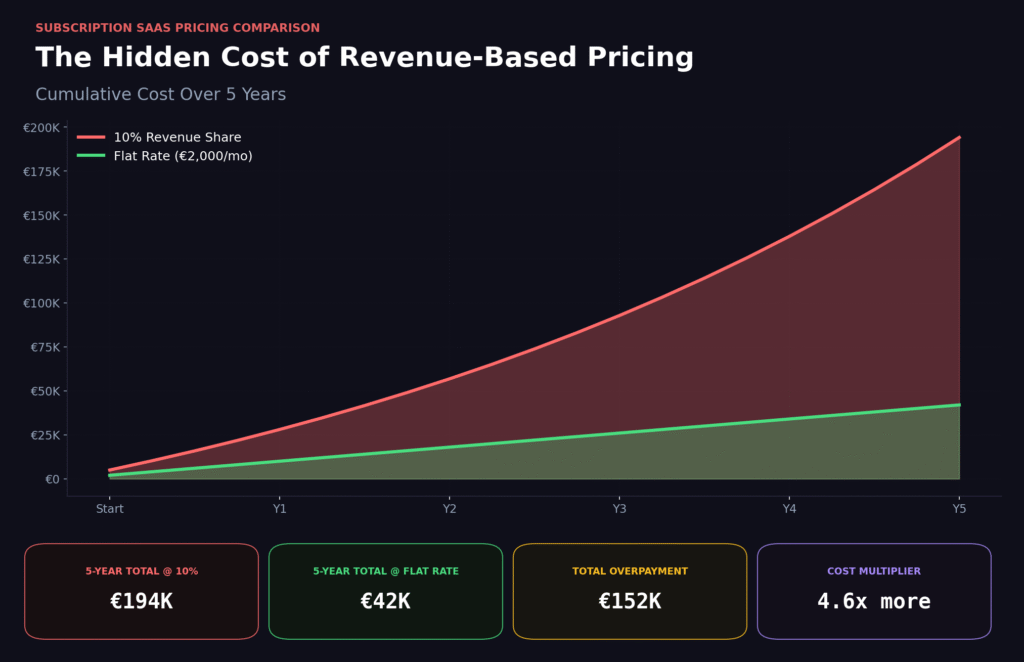
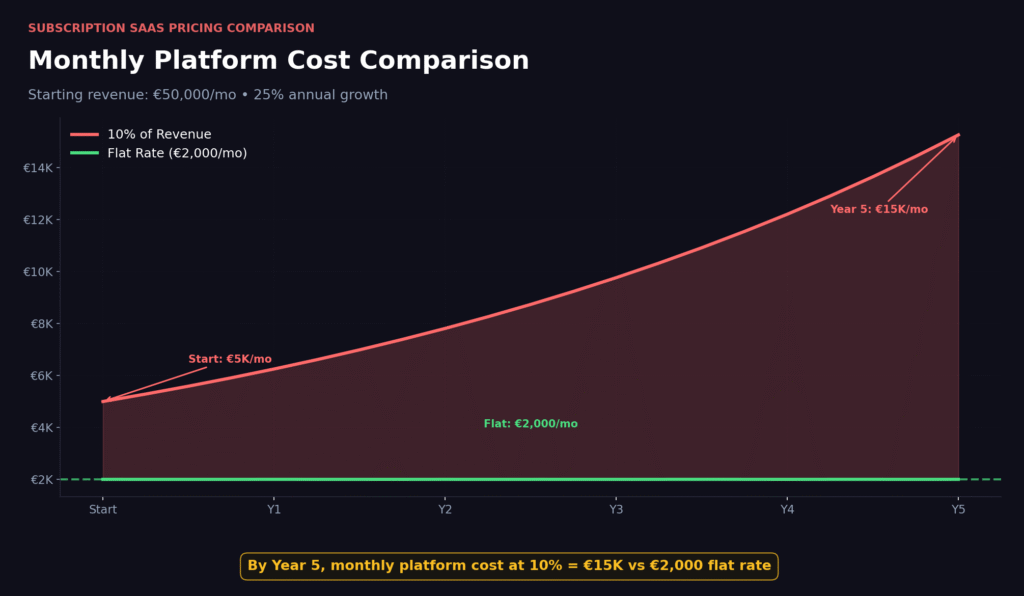
Proprietary subscription platforms typically price based on subscriber count, revenue share, or usage tiers. This model creates a perverse dynamic: the more successful you become, the more you pay. Your costs scale precisely when your margins should be improving. Vendors capture an increasing share of the value you create.
Publishers should consider reader revenue infrastructure in the same way they think about other core investments: what do we own at the end, and what happens if we need to change course?
A content management system, once implemented, becomes organizational knowledge. Staff learn it, workflows adapt to it, archives accumulate in it.
The same is true for subscription infrastructure. Your segments, your automation logic, your subscriber history, your conversion data; these are assets that compound in value over time.
When that infrastructure is rented, those assets live on someone else’s servers, subject to someone else’s pricing decisions, exportable only to the extent the vendor permits.
When the vendor raises rates, you negotiate from weakness. When they get acquired, you wait to learn your fate. When they sunset features you depend on, you adapt to their timeline.
Open-source infrastructure inverts this. Your costs are tied to hosting, maintenance, and development, not to your success. The subscriber data, the behavioral history, the automation workflows you build: these remain yours regardless of what any vendor decides. The investment you make in year one continues to pay returns in year five without a renegotiation.
This predictability changes how publishers can plan. Growth becomes a pure upside rather than a trigger for cost increases. Multi-year projections become realistic. And critically, the infrastructure serves the publisher’s mission rather than generating returns for outside investors.
Related articles
Democratic infrastructure
The alignment between WordPress and REMP runs deeper than technical compatibility. Both emerged from communities that believe essential publishing tools should be owned by the people who use them.
Automattic has spent two decades building a business around WordPress while keeping the core freely available. Matt Mullenweg and the WordPress community championed the open web before it was fashionable, and continued to do so even when it became unfashionable.
WordPress now powers over 43% of the web, not because it locked publishers in, but because it made world-class content management accessible to anyone willing to learn it. The ecosystem thrived precisely because the core remained open.
Denník N built REMP from a parallel conviction. A team of journalists left a legacy publication to start an independent newspaper in Slovakia.
They needed subscription infrastructure to make that independence viable, found nothing adequate in the market, and built their own.
Then they open-sourced it with support from the Google News Initiative, not as a side project, but as a core belief: tools this fundamental to independent journalism shouldn’t exist only for publishers who can afford enterprise contracts.
Both projects demonstrate something counterintuitive: openness and sustainability can reinforce each other. WordPress and REMP aren’t open-source despite being successful. They’re successful in part because they’re open-source.
The communities that form around open tools contribute improvements, surface problems, and extend functionality in ways no single company could replicate.
For publishers choosing infrastructure, this lineage matters. You’re not just selecting software. You’re aligning with an ecosystem and a set of values about how publishing tools should work and who they should serve.
Subscribe to our newsletter for more publisher stories and strategies straight into your inbox.
Enjoyed the post? Share it.

A digital news strategist interested in growing direct revenue, AI and newsroom innovation.