Four publishers, one growth playbook: what The Guardian, Denník N, Uusi Juttu and Kyiv Independent told Perugia about reader revenue

April 20, 2026
April 20, 2026
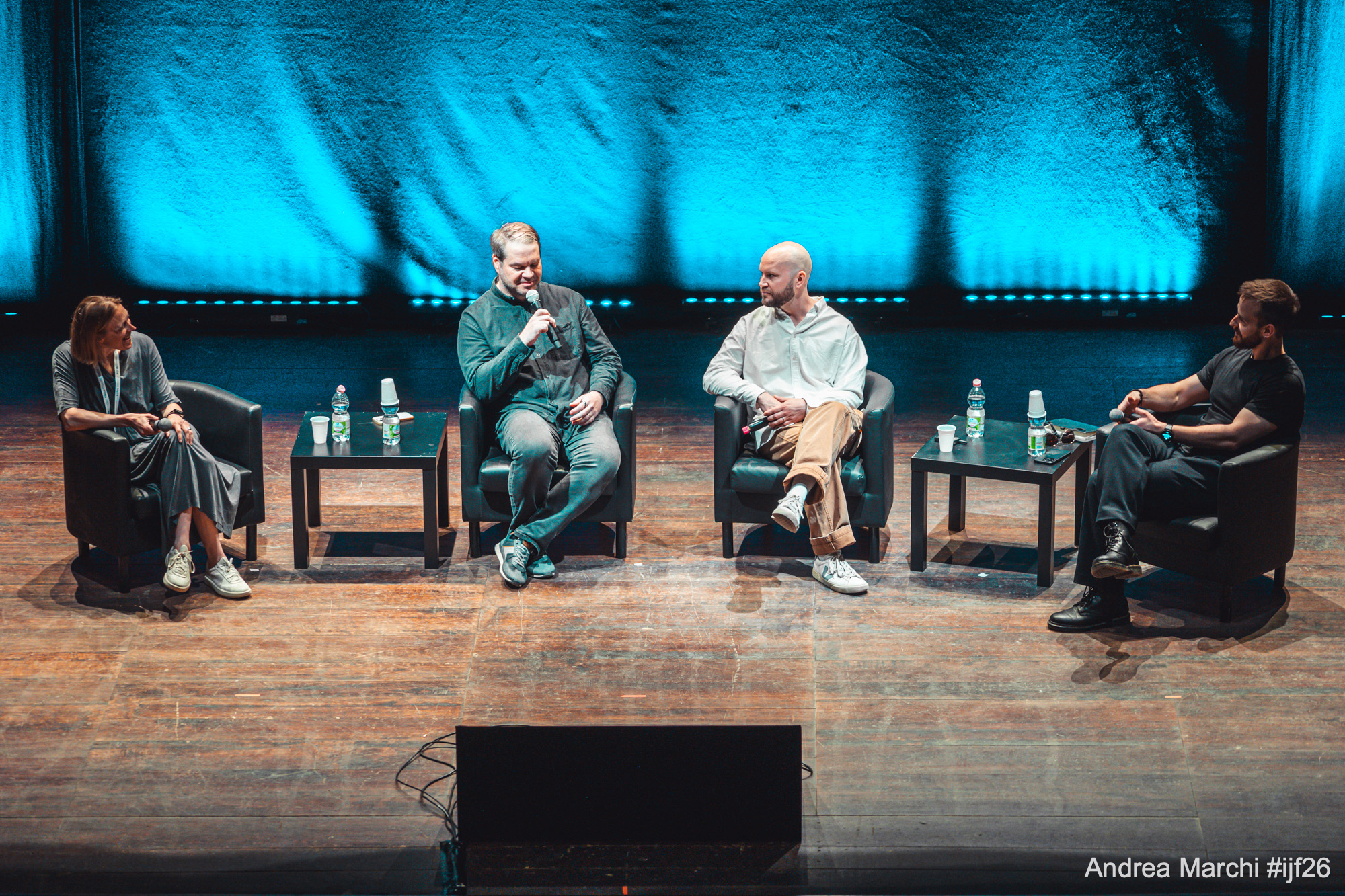
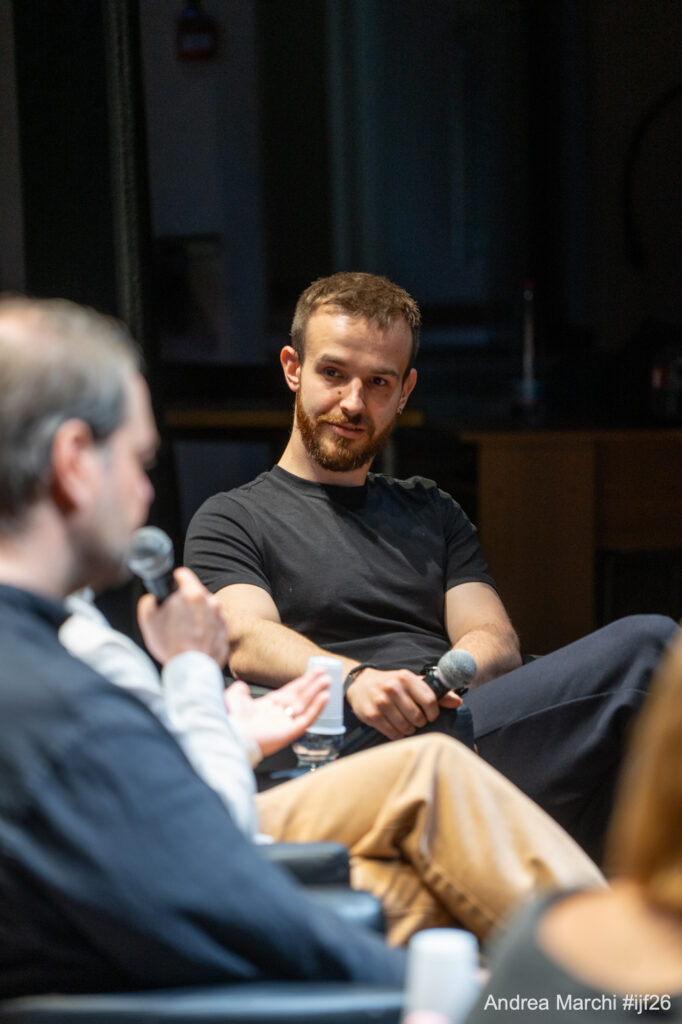
The Guardian, Denník N, Uusi Juttu and Kyiv Independent representatives in Perugia, at the International Journalism Festival in 2026 (Photo: Andrea Marchi (IJF26))
The Guardian, Denník N, Uusi Juttu and Kyiv Independent look nothing alike, but their reader-revenue playbooks converge on three shared principles.
At the International Journalism Festival in Perugia, four publications that all get the majority of their revenue from readers sat on the same panel and compared notes on how they grow.
The Guardian (204 years old, 1.3 million supporters), Denník N (12 years old, 75k subscribers), Uusi Juttu (15 months old, 20k members), and the Kyiv Independent (4 years old, 29k members) are, at first glance, completely different publications and have used a distinct approach to grow their direct audience revenue.
In truth, their strategies represent different phases of a very similar school of thought, and on closer inspection, similarities emerge.
If you are looking for the core connection between them, it is that growth is everyone’s job, and none of them operates their reader-revenue team in a silo; everything is integrated across the organisation, including performance metrics.
“We have always wanted growth to be everybody’s business. It’s not only the marketing team’s business, it’s not only the executives’ business, but it’s also the business of the journalists. In a membership model where 100% of the revenue comes from membership fees, everybody has the same client. That’s very natural for everybody,” said Antti Pikkanen, the co-founder and CEO of Uusi Juttu.
“There is no special culture that won’t pay. What there is is a slow social-proofing process: people start paying for journalism when their friends do, which is why the first few years in any new market feel stuck. And the target is not a whole country. You are usually trying to convert like 1%,” said Tomas Bella, Chief Digital Officer of Denník N, during the question time.
“People do want to support us, and they didn’t really necessarily need that much in return. Our readers want to support The Guardian, want to sustain what we’re doing, they want to fund independent, fearless journalism, journalism that gives a unique global perspective that they can’t get elsewhere, and they’re willing to do that directly with us,” said Liz Wynn, Chief Supporter Revenue Officer at The Guardian.
“The media often are shy to repeat things. But actually, the repetition is where the value comes from,” explained Zakhar Protsiuk, Chief Operating Officer at The Kyiv Independent, hinting at doing persistent marketing and communications of their membership.
Subscribe to our newsletter for more publisher stories and strategies straight into your inbox.
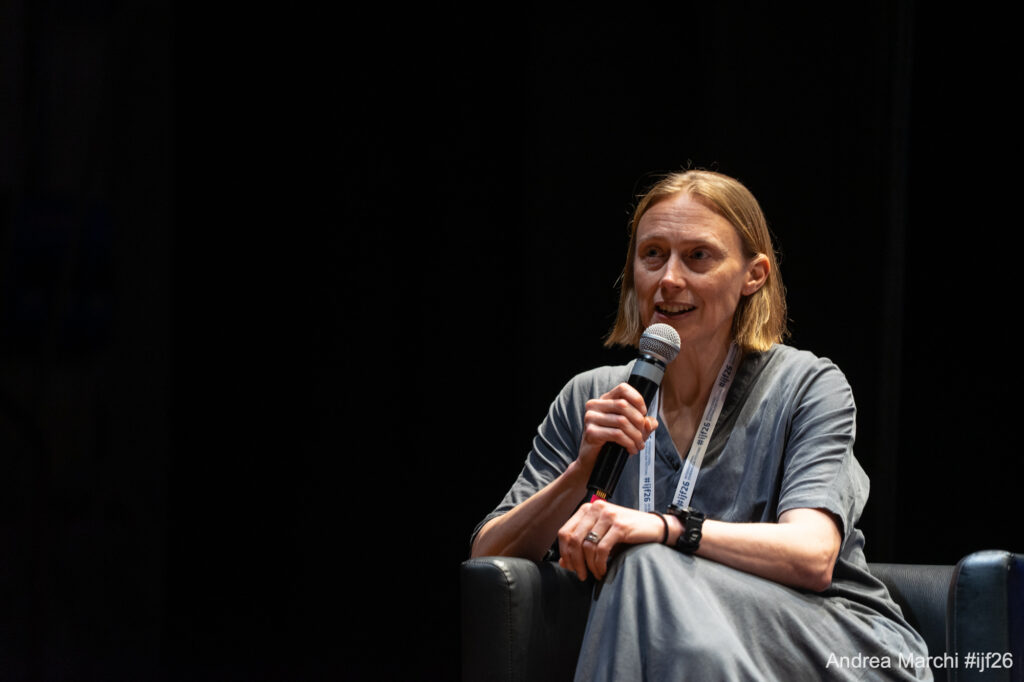
Liz Wynn, Chief Supporter Revenue Officer at The Guardian. Photo: Andrea Marchi (IJF26)
Liz Wynn told the origin story of how they started with audience funding. The Guardian was burning £100 million a year with five years of runway left. “We needed to try everything,” said Katharine Viner, the editor-in-chief, to the team. Someone put an ask at the bottom of an article. It worked.
A decade later, The Guardian has 1.3 million recurring digital supporters and passed £100 million in digital reader revenue last year, without a paywall.
The Guardian runs three tentpole supporter campaigns a year: World Press Freedom Day, which is also the paper’s birthday in May (last year’s was “Facts are sacred”), climate in summer, and an end-of-year US-style fundraising push.
“Those are moments which allow us to generate intent to support, independent of what’s going on in the news,” Wynn said.
For years, The Guardian had two buttons on the site: donate or subscribe. It was confusing. They collapsed both into a single “support us” message and let the reader self-select what form of support makes sense.
Last year, during an INMA webinar, Wynn explained that The Guardian has identified distinct audience segments based on user behaviour and motivation: mission-driven donors, news enthusiasts who want the premium app, and lifestyle readers who come in through Feast (the cooking app).
Wynn was also candid that The Guardian is too big for one metric. What they track is a composite: daily frequency, direct connection (i.e. registered email), brand affinity, and trigger to support.
The registered audience target, growing from under 1 million two years ago to 8 million today, aiming at 10–15 million, is probably the closest thing to a North Star.
Tomas Bella, Chief Digital Officer of Denník N. Photo: Andrea Marchi (IJF26)
Tomas Bella, co-founder and Chief Digital Officer of Denník N, described two parallel growth engines. The first is the everyday funnel work, e-commerce stuff that anyone can learn. The second is the rarer kind: campaigns that reposition the subscription as support for a bigger cause than just journalism.
His example from the European elections: Slovakia historically has the lowest EU election turnout in the Union. Denník N announced two weeks before the vote that the discount on new subscriptions would scale with turnout; the more Slovaks voted, the bigger the discount.
Denník N’s January 2025 10th-anniversary campaign went even further. The paper made 10 public promises: unlock the 10-year archive, give free subscriptions to pensioners and students, donate Denník N to all senior clubs, lecture 10,000 students on social-media dangers, contingent on bringing in 10,000 new subscribers in six weeks. They hit 10,000 in four days and finished at 24,366 in two weeks.
Bella’s most useful framing for publishers worried their market “just doesn’t pay” came later in the session, in response to a question from an Arab-region publisher.
Twenty years ago, he said, Swiss and Norwegian publishers were telling him the same thing about their audiences, and they were all wrong.
There is no special culture that won’t pay. What there is is a slow social-proofing process: people start paying for journalism when their friends do, which is why the first few years in any new market feel stuck.
And the target is not a whole country. “You are usually trying to convert like 1%,” Bella said. “If you persuade 1% who actually have money, who actually are educated, then usually you are loaded.”
His advice to publishers in earlier-stage markets: “Don’t start from ‘our people are different.’ Steal tactics from The Guardian, Denník N, the Finns, the Ukrainians, people have already figured out a version of this.”
Every journalist in Denník N sees the best-selling articles daily. In the first three years, articles got twice as long because reporters realised focusing deeply on one piece outperformed cranking out five.
Tomas Bella also had a response to the (often unspoken) fear that this kind of commercial visibility corrupts journalism. Turns out, the top-selling authors are the same ones winning journalism prizes.
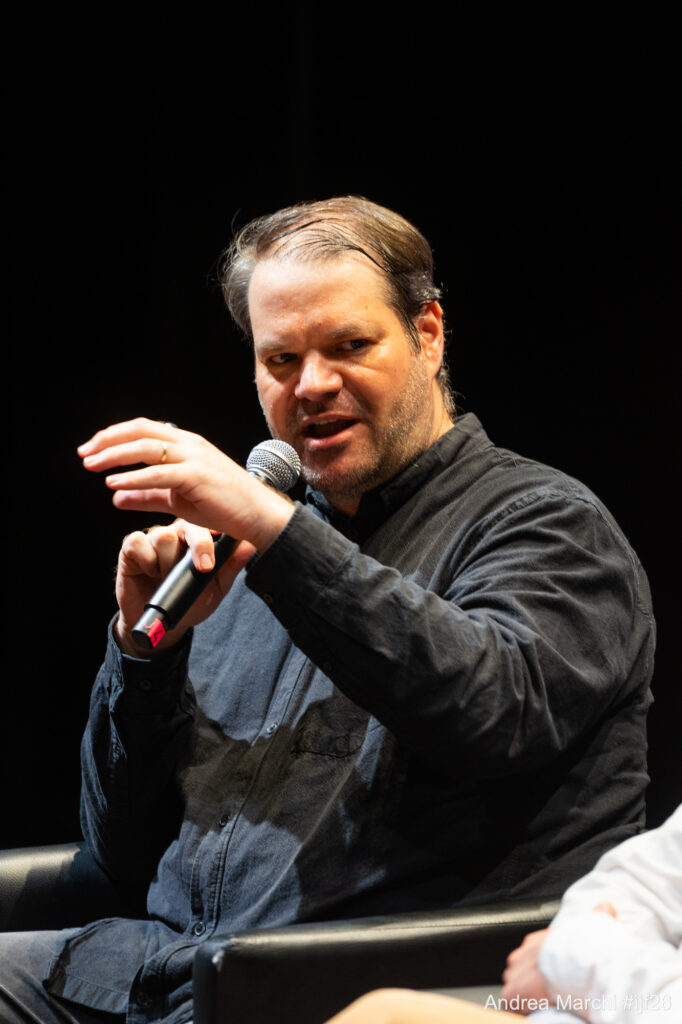
Antti Pikkanen, the co-founder and CEO of Uusi Juttu. Photo: Andrea Marchi (IJF26)
Antti Pikkanen’s Finnish startup Uusi Juttu is only 15 months old and already has more than 20,000 paying members.
It didn’t exist when it asked Finns to pay for a year’s membership, yet it launched in January 2025 with around 12,000 subscribers and had grown to nearly 16,000 by March.
Pikkanen’s model (co-owned by Danish membership pioneer Zetland) is 100% member-funded, with no advertising. That changes the organisational wiring: “It’s very natural for everybody. We don’t have to sell advertising space to companies. We don’t have to run a function like that,” explained Pikkanen to the festival crowd.
Early on, some members took that ownership so seriously they went to shopping malls themselves to sell memberships, “a pretty shitty way to try to sell memberships,” Pikkanen admitted, but a telling signal of how engaged the base already was.
Faced with the calculations towards profitability (or at least sustainability) required 5,000 more members, Uusi Juttu didn’t run paid ads.
They emailed their existing members, who had, after all, already crowdfunded a product that didn’t exist, and asked them to find the missing 5,000.
They brought in 10,596 new members in 21 days without spending on advertising, using only referral links, talking points, and a leaderboard.
Pikkanen’s framing of what “campaign” actually means is worth quoting directly, because it contradicts how most publishers use the word: to him, it’s not a media buy and a messaging sprint.
It’s the decision to ask your members for help and live up to what you promised them, repeatedly, in public, with their participation.
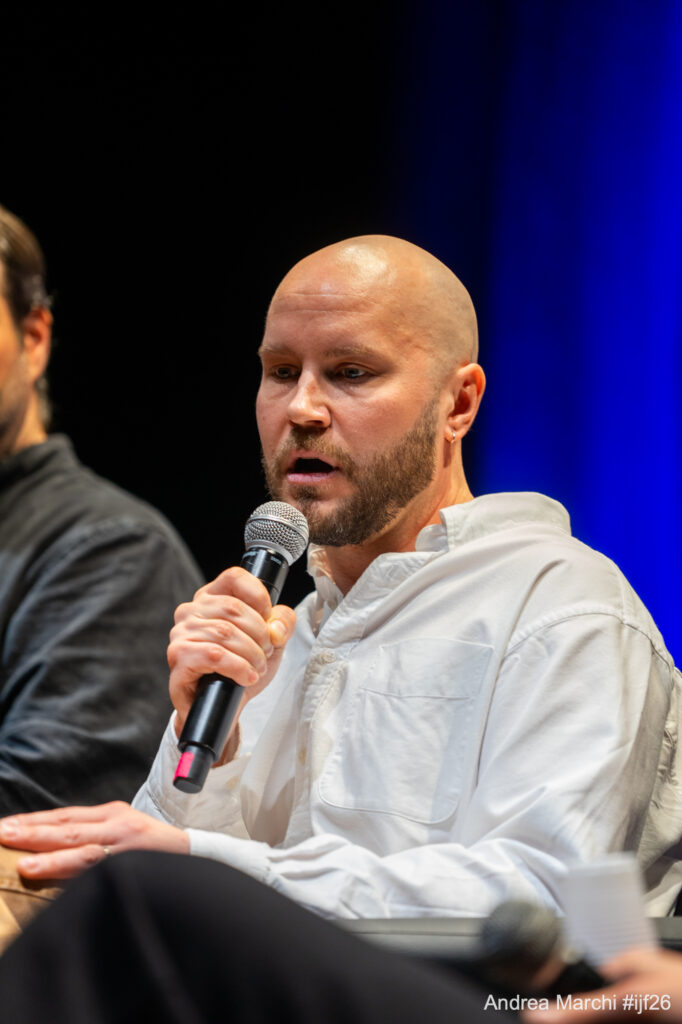
Zakhar Protsiuk, Chief Operating Officer at The Kyiv Independent. Photo: Andrea Marchi (IJF26)
Zakhar Protsiuk, while moderating the panel discussion, made two points that are easy to underestimate.
First, the Kyiv Independent’s North Star metric is just the number of paying members. No LTV, no ARPU, no composite score. At their stage, simplicity compounds better than sophistication.
Remember, Kyiv Independent, like The Guardian, doesn’t have a hard paywall, and everyone can access their reporting, yet it has amassed more than 29,000 paying members.
Second, on the audience question about how to convince a sceptical market to pay: repetition is the job. He told a story about a friend who knew the Kyiv Independent team personally, had even donated, and still didn’t know they had a membership after years of exposure. “Just kind of keep going.”
A campaign is a counterpoint to news, not a reaction to it. The Guardian runs three big ones a year, Denník N runs fewer but bigger, and Uusi Juttu built its whole existence around them. The shared principle: a time-bounded, publicly stated goal focuses both the team and the audience in a way that always-on marketing never does.
Members actually want to help if you make it easy. Uusi Juttu’s ambassador campaign and Denník N’s referral leaderboard worked because the mechanics were dead simple (a link, talking points, visible progress) and because both publications had already invested in the relationship. Bella’s 1% framing (above) goes with this: the question isn’t whether a whole country will pay, it’s whether you can build a social-proofing loop among the slice that will.
Growth has to be everyone’s job. Denník N makes this literal with daily performance emails and transparent bonuses. Uusi Juttu makes it cultural because there’s no ad revenue to compete for. The Guardian does it through shared engagement metrics.
Subscribe to our newsletter for more publisher stories and strategies straight into your inbox.
Enjoyed the post? Share it.
A journalist, podcaster and audience development strategist interested in the business of news.