
What every publisher can learn from Denník N's newsletter strategy
How Slovakia’s leading independent newsroom turned newsletters into the spine of its 75,000-subscriber business, and what publishers can learn from the way Denník N runs them on REMP Mailer.
Newsletters do three jobs at Denník N. They bridge anonymous readers to registration, registered users to paid subscription, and paying readers to long-term retention. Two million emails per month are sent by a single newsletter in the portfolio, and the entire operation runs on REMP Mailer.
That setup did not happen overnight. Back in 2018, Denník N wrote in their newsroom blog: “With Facebook no longer a reliable partner for news distribution, the pivot to newsletters has become our most critical bridge between simple registration and loyal subscription.”
Eight years on, that pivot has produced an ecosystem of more than a couple of dozen recurring email products, each with a defined role in the funnel.
FatChilli spoke with Radoslav Augustín, Head of Product at Denník N, about how the strategy was built and what other publishers can learn from it.

From the moment you give us your email, we start the onboarding process. This is what was missing in the customer cycle, this kind of bridge that we're filling in with Five Morning Minutes.
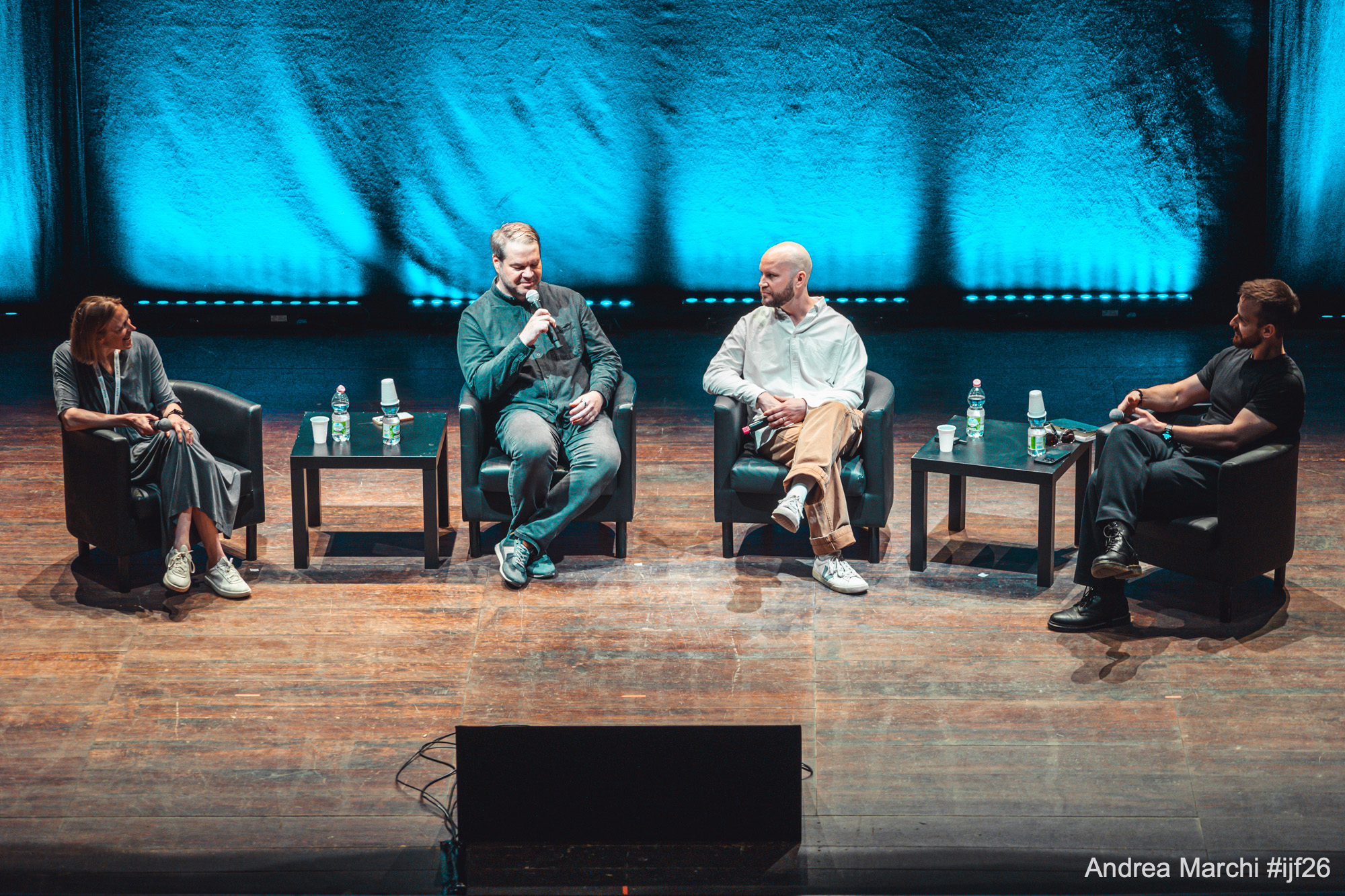
Radoslav Augustín, Head of Product at Denník N
Denník N runs all newsletters on REMP Mailer, part of the Readers’ Engagement and Monetization Platform. Data flows into one CRM, where the newsroom can see engagement from every user across website visits, email behaviour, and subscription history.
For most independent publishers, newsletters are the single highest-converting product they own. Known users (registered or newsletter subscribers) convert into paying readers at meaningfully higher rates than anonymous visitors, and they retain better once they pay.
Yet most newsrooms still treat newsletters as an editorial afterthought, run them through generic ESPs designed for e-commerce, and never connect them to subscription data in a way that compounds.
Others have set up automated newsletters that have grown over the years, but engagement stays low, and there is no clear strategy to convert loyal email subscribers into paying supporters.
Denník N has done the opposite for nearly a decade. The independent Slovak daily, founded in 2015 by 40 journalists, has grown into a debt-free business with over 75,000 paid subscribers, 130 staff, a Czech sister title (Deník N), a Hungarian sister site (Napunk), and, most recently, EUobserver in Brussels.
Its newsletter portfolio sits at the center of how that audience is acquired and retained.
The portfolio breaks down into several types. There are free, open newsletters for anyone (signing up is also how anonymous users register). There are subscriber-only newsletters, which Denník N rebranded as “newsfilters.” There are pop-up newsletters that the newsroom spins up for specific events, like the Olympics, mostly sports-related. And there are supplementary niche newsletters.
Denník N also sends notification emails when a user follows an author or topic, plus automated newsletters as part of onboarding and win-back flows.
Finally, there are product and event newsletters that promote live events and announce new titles from the publishing house.
Fun fact: As Denník N has been the first major news outlet to take newsletters seriously in its subscription strategy, and because of the rebrand of its flagship newsletters to newsfilters, some readers in the country, to this day, call newsletters newsfilters.
The free flagship newsletter: 2 million emails sent per month

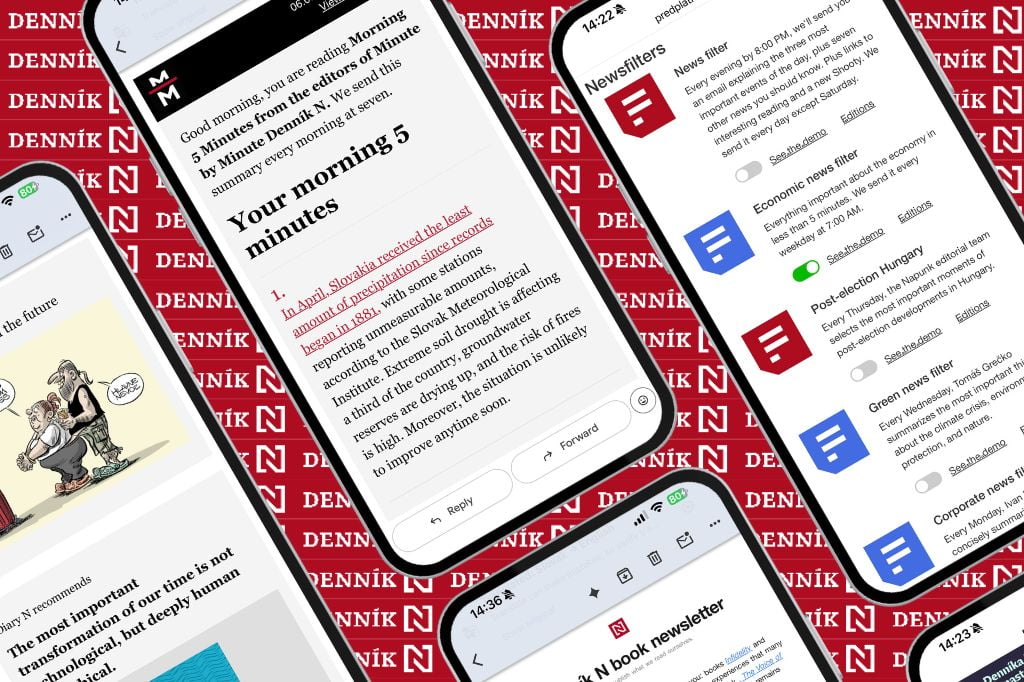
Denník N newsletter logos.
The free daily news summary illustrates how the strategy has matured over the decade.
The newsletter started under the name “News of the day” (in Slovak: Správy dňa) all the way back in 2017. At the time, it was an automated summary of short news items the newsroom flagged as important.
Readers could opt to receive News of the day in the morning at 7:00, after work at 16:00, or in the late evening at 21:00.
Three years ago, Denník N overhauled the newsletter and rebranded it. It got a new logic, a single schedule, and crucially, it shifted from automated to curated and edited by journalists.
The new name, “Five Morning Minutes” (in Slovak: Ranných 5 minút), reflected both the unified schedule and the time it should take readers to digest the news.
“Of just our Five Morning Minutes newsletter, which is essentially the basic daily newsletter that everyone gets at registration, we sent 2 million copies in the last month,” Augustín said.
Five Morning Minutes goes out every morning at 7:00. It is built around the editorial spine of Denník N’s Minute by minute (In Slovak: Minúta po minúte) breaking news service, which in 2022 produced an average of 200 short news items per day.
Editors curate five to ten of the most important stories from the past 24 hours. They add a summary of last night’s subscriber-exclusive Newsfilter, the morning Economy newsfilter, links to weekly themed roundups, the daily news podcast interview, the day’s calendar, the weather, and a cartoon.
Five Morning Minutes is not just a newsletter. It is the connective tissue between a free user and a paying subscriber. The newsletter currently has around 61,000 subscribers.
The number rises and falls with promotional periods. It touched 90,000 after the 10th anniversary campaign. The newsroom cleans the list aggressively across all newsletters.
“We unsubscribe people if they stop opening it, so it self-cleans. After the anniversary action, we had almost 90,000 people, so now it’s around 60k, so it actually jumps up and down depending on the situation,” Augustín said. For him, raw subscriber counts matter less than the open rate over time.
List hygiene at this scale is non-negotiable for sender reputation, and it is built into REMP Mailer’s automation. Skip the cleanup, and your deliverability suffers. At high volumes, you also keep paying your email service provider to deliver to zombie addresses.
The old automated digest had roughly 24,000 subscribers and was not delivering. Meanwhile, other Slovak outlets had started running their own handwritten newsletters.
“The benefit is that people are doing it, editors are doing it. So this was actually before the ‘AI times’. I think the benefit of humans doing it is now even bigger,” Augustín said.
Related article
Subscribe to our newsletter for more publisher stories and strategies straight into your inbox.
Acquisition newsletters vs retention newsletters
REMP Mailer
The most useful frame Augustín offered is the way Denník N thinks about the purpose of each newsletter, not just its topic. Every email in the portfolio sits in one of two categories: acquisition or retention. Some products bridge both.
Five Morning Minutes is open to non-subscribers. That is the whole point. The newsletter exists so that a registered (but unpaid) user has a daily reason to engage with Denník N’s editorial product, see what is behind the paywall, and graduate to paying.
“It’s supposed to be specifically a kind of pre-warming for conversion. We treat it as a form of onboarding in its own way. From the moment you give us your email, we start the onboarding process. This is what was missing in the customer cycle, this kind of bridge that we’re filling in with Five Morning Minutes,” Augustín explained.
Then there is the second category: subscriber-only newsletters that exist to keep people paying.
“The main Newsfilter and all the newsfilter-called newsletters are distributed on the web and also go out as newsletters, that is purely a retention tool. We can simply see that they perform very strongly on retention, and we also treat them as their own brands,” Augustín added.
Newsfilter is the flagship paid newsletter. It is essentially an evening roundup where opinion writers comment on the day’s three biggest events plus seven smaller ones, with links, a quote of the day, and the latest cartoon.
It goes out every weekday, plus a special Sunday edition. Around it sits a constellation of branded weeklies and dailies: the Economic newsfilter, the Green newsfilter (climate crisis), the World newsfilter, the Corruption newsfilter, the Corporate newsfilter (Slovakia-based companies), MediaBrífing (media and the internet), and Hungary after elections (top stories from Hungary, curated by Denník N’s sister site Napunk).
The biggest newsletter on the list, though, with almost 90,000 subscribers, is the editor-in-chief’s Friday selection of the week’s top five articles.
It is one of Denník N’s oldest newsletters. Its value for acquisition or retention is relatively low, but so is the production cost (the editor-in-chief picks five links), so it has stayed in rotation.
Related articles
The “low-effort newsletter” doctrine: write once, distribute twice
Dennik N newsroom by Tomas Benedikovic
Here is the operational insight that lets Denník N run more than a dozen recurring newsletter brands without burning out a small editorial team.
“It’s all those low-effort newsletters, in the sense that we try to have recurring formats, like some show on Netflix, readers simply keep coming back, and return to them, they know them, and there is consistency. Readers will surface them on the web, on social media, and in their own inboxes. Online, the newsletter actually looks like a newsletter; we often use ‘Good morning’ and similar greetings to disrupt people, to signal: this is a newsletter,” Augustín said.
All newsletters are published as articles on the web first, then automatically packaged and sent to the relevant subscribers.
There is no separate “newsletter team” producing email-only content. No editor presses a “send” button. It goes out automatically.
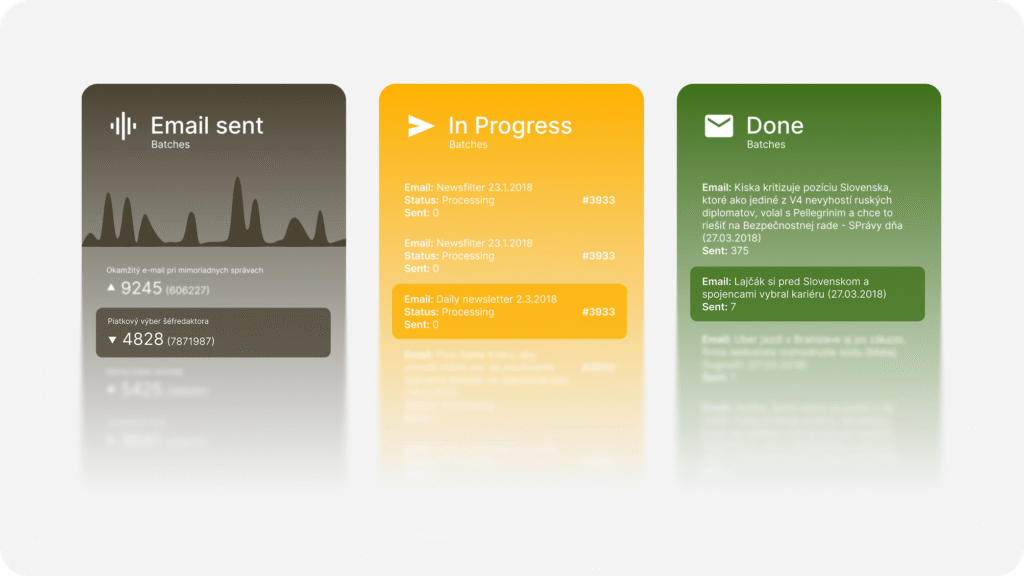
This is what REMP Mailer is built for. The Mailer module connects directly to the CMS and the CRM. Each newsletter runs on its own settings, and all the data flows back to the CRM.
As FatChilli’s own analysis of REMP Mailer puts it, the module ships with automated newsletter builders and an article-locker that mirrors the website paywall inside the email: paying subscribers see the full preview, non-payers see a conversion prompt in the same send.
Augustín thinks the system can still be pushed further. Despite the “Hello” and “Good morning” framing, everything still looks like an article, which can confuse readers.
“It’s a thing of the interface. People are confused, for example, by the format, because they see some topic in the headline, but the information is buried in the core of the newsletter, so they perceive it as a strange article. So again, this is the thing where everything looks like an article at our place. We have many products, and we want to somehow separate them. We’re working on it,” Augustín said.
Austrian weekly Falter offers a sharp example of how visual cues can solve this.
A regular article looks normal: headline, author bio, text. But a newsletter article carries a letter icon before the headline, displays the email subject line, and feels like reading an email in your inbox. The visual difference is small but meaningful.
A planned visual revamp will give Denník N’s newsletters their own sub-brand identity on the web so readers understand they are entering “a newsletter space” rather than just another article.
The underappreciated newsletter signup hack
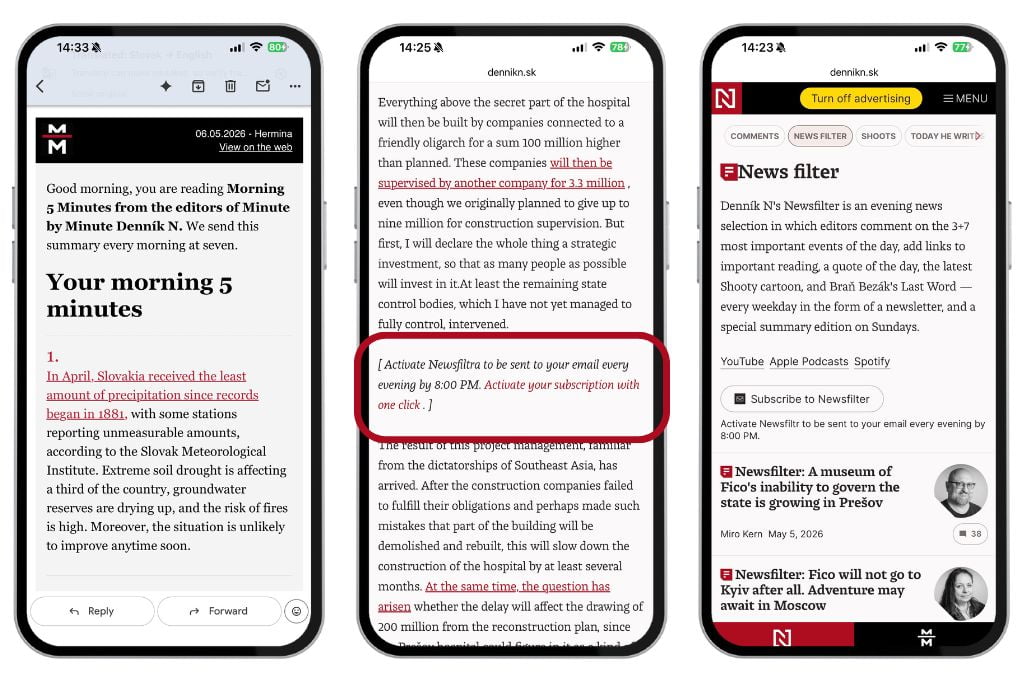
The Five Morning Minutes newsletter, the newsletter signup, and the Newsfilter newsletter archive.
If you look at how newsletters are promoted inside Denník N articles, you will notice something unusual: there is no big, bordered “Subscribe to our newsletter” box with a button.
Instead, there is a single italic sentence, written in the journalist’s voice, with a hyperlink.
It was a deliberate, tested choice.
“Back in 2018, when we launched the newsletter signups, we tested different variants. And this worked the best. We tested a signup box and a simple linked text in italics, and that won the test. I guess it looks like a journalist wrote some kind of tip there about what they recommend you subscribe to, in their own way. It doesn’t look the same as an ad, so it doesn’t get filtered out by the eye.”
The lesson is the one banner-blindness research has been telling us for years: the more your CTA looks like an ad unit, the less effective it becomes.
A casual sentence inside flowing copy, written in the first person of the byline, will usually outperform a templated module that the eye has been trained to skip.
It is worth A/B testing on your own site before you accept the standard “subscription box” UI as a given.
A common mistake on news sites is to keep prompting users for newsletter signups they have already taken. Denník N solved this with a hierarchy.
“When you activate one [newsletter], you won’t see us promote it to you again. For one article, several newsletters can come up as relevant according to tags, and if not a newsletter, then a topic subscription, which is always available there. So there is a hierarchy: we want you to first activate our flagship newsletter: Newsfilter, and once you have it, we’ll suggest something else lower down,” Augustín explained.
Each article is associated with relevant newsletter offers via tags. The system remembers what you have subscribed to and offers you the next-best option down the hierarchy.
If no newsletter fits, it falls back to a topic alert or author follow, which Denník N runs at scale.
“It’s a strong signal when we look at the attractiveness of topics, or whether some topic is worth turning into a newsletter.”
In other words, topic follow and author follow are not just a personalisation feature. They are the demand signal that tells the product team which newsletter to launch next.
Because every newsletter is also published as an article on the site, and every article carries an audio version, the email itself can offer readers a listen-instead option that drives traffic back.
Related articles
Lessons from Denník N’s newsletter strategy
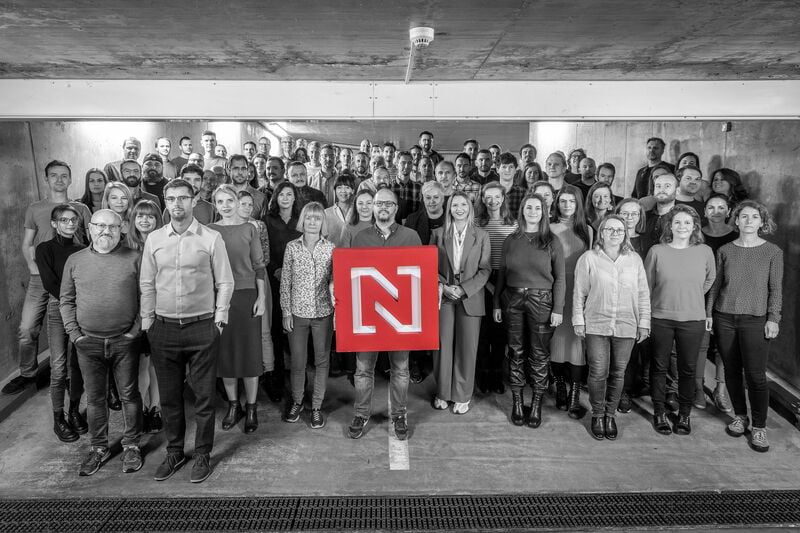
Denník N newsroom.
If you map the current system, it looks roughly like this:
- An anonymous visitor lands on the site (often from search or social).
- An italic in-article CTA invites them to subscribe to a relevant newsletter or to follow a topic or author. Tags decide which appears.
- Email subscription = registration + automatic subscription to a couple of newsletters. Those do the daily warming.
- Onboarded user gets exposed to the breadth of Denník N’s branded products through Ranných 5 minút. Topic and author alerts can deepen engagement before any payment.
- Conversion to paying subscriber unlocks retention newsletters: Newsfilter, the themed newsfilters, the weeklies, and the editor-in-chief’s Friday picks.
- Inactive readers are auto-unsubscribed.
Every layer of that funnel runs on REMP. The newsletters themselves run on REMP Mailer, segmentation runs on REMP CRM and Beam, on-site banners and acquisition campaigns run on REMP Campaign, and lifecycle automation lives in the Scenario Builder.
You can replicate Denník N’s newsletter strategy on a generic ESP. Lots of publishers try. But you will hit three walls fast:
- Cost scales painfully. Mailchimp’s prices have risen 20–30% since the Intuit acquisition, and most ESPs charge per contact regardless of whether that contact is monetised. At 80,000+ subscribers and 2 million sends a month from a single newsletter, the costs increase meaningfully.
- Data is fragmented. Generic ESPs do not natively know whether a recipient is a paying subscriber, a lapsed trial user, or a high-propensity prospect. You end up duct-taping integrations, and your automation logic gets brittle.
- Automation is shallow. Truly automatic newsletters that compile themselves from CMS articles, segmented by tag, with article-lock previews for non-payers, are not a thing in most ESPs. They are the default in REMP Mailer.
REMP Mailer was built specifically for newsrooms.
On top of that, Denník N is using emails for internal communication. Each morning, an email is sent to everyone that tells the staff which stories had the most sales and which led to the largest number of subscriptions.
“I will never give reporters numbers on the pageviews because sometimes the relationship is almost the reverse, where you have clickbait. Any idiot can get a lot of clicks, right? You can easily cheat the system on the papers. Here, you can’t so easily cheat the readers because they are only going to pay for something that actually has a value,” Tomáš Bella, Chief Digital Officer at Dennik N, explained the logic to the audience of INMA Media Subscriptions Summit in London in 2018.
Five takeaways for publishers rethinking their newsletter operation
- Define each newsletter’s job in the funnel. Acquisition or retention. Free or paid. Onboarding or lifecycle. If you cannot say in one sentence what a newsletter is for, it will quietly underperform and waste editorial energy.
- Make registration equal newsletter subscription. Do not separate them. The registered user with no newsletter is a wasted email address.
- Build “low-effort” recurring brands. Pick a handful of recurring formats (a daily summary, a weekly themed roundup, a topic deep-dive) and let them publish to the web and to email at the same time. Consistency is what builds the habit. Heroic one-off newsletters do not scale.
- Test the in-article CTA. Stop assuming the boxed subscribe widget is best. A single italic sentence in the journalist’s voice may convert better. Run the test.
- Align editorial incentives. Make it easy for journalists to turn the articles they are already writing into recurring newsletters. The lower the friction, the more recurring brands you will get.
If you want to see how REMP and REMP Mailer could fit into your own operation, get in touch with FatChilli.
And if you want more reporting like this, you can subscribe to the FatChilli newsletter to get the next pieces straight to your inbox.
Enjoyed the post? Share it.

A journalist, podcaster and audience development strategist interested in the business of news.








FatChilli's Solutions