
Hi friend 👋
Welcome back to The FatChilli Playbook. One email, for publishers, editors, and product people who think about reader revenue more than is strictly healthy.
This issue is, unexpectedly, about BuzzFeed. Not the company. The format. It turns out the thing almost everyone abandoned years ago because it made no money now can make rather a lot of money.
And what? People still love quizzes; publishers just aren’t doing them so much anymore because what’s the point? One word: higher returns. Ok, that’s two, but you catch my drift.
Also: what happens to a small European media market when Google stops sending clicks, and why your analytics can tell you what happened but not why. Spoiler alert: panic sets in.
Still David here (audience revenue & engagement at FatChilli for Publishers).
Let’s go.
Oh, and don’t forget to forward this newsletter to colleagues who might be interested. They can sign up here.
The quiz was never the problem. The banner was
Everyone remembers the glory days of BuzzFeed and the quizzes. It’s probably been a minute since you seriously thought about either of them.
Don’t mind the former; let’s focus on the latter. FatChilli recently ran a successful experiment to see just how much better publishers could monetize quizzes. (Think of a number and I promise you it was higher).
BurdaMedia Extra, the Czech arm of the 123-year-old German publishing house Hubert Burda Media, has tested an alternative to display banners for quiz monetization for a couple of months.
Rewarded ads for the web. And the results are quite honestly mind-blowing.
Readers arriving at a quiz on its flagship lifestyle site Marianne.cz are offered a short video ad first. Watch it, take the quiz. No registration, no paywall, no trick.
58% of readers who hit the gate watched the ad and unlocked the quiz. Of those who pressed play, 96% watched to the end. Fewer than 4% bailed partway.
The result?
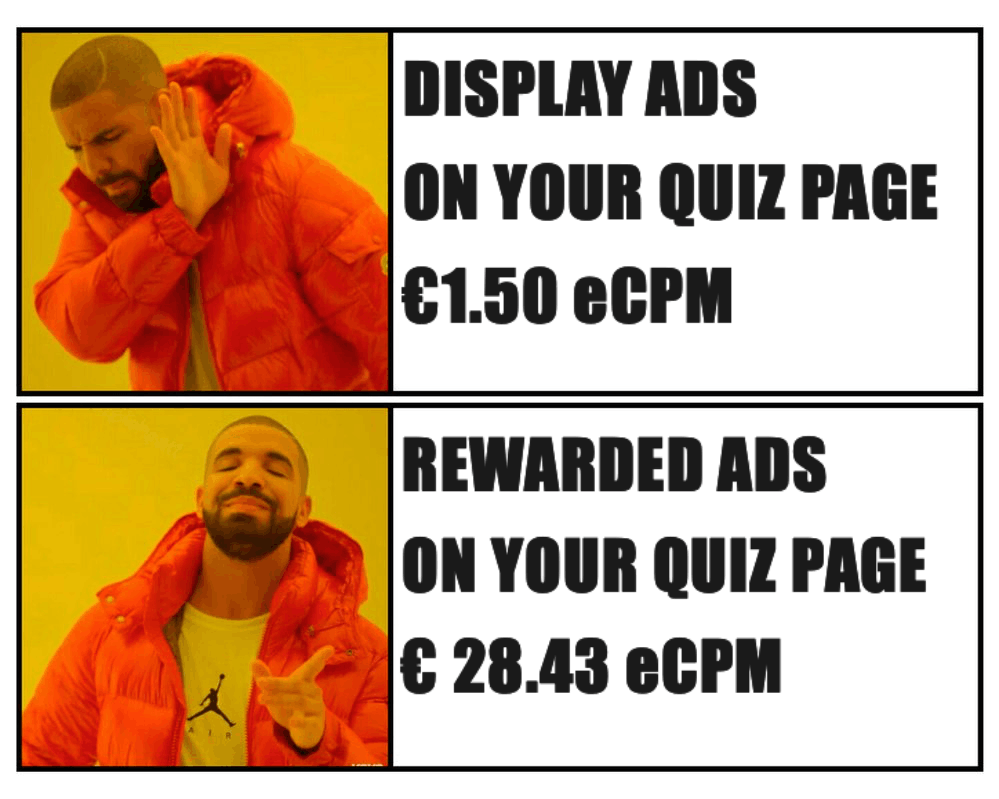
Rewarded ads on Marianne’s quizzes earned more than 16 times the eCPM of Burda’s standard programmatic display. Not sixteen percent. Sixteen times.
After the first month, we have even raised the price floor from €20 to €25. Results got better.
66.7% of ad requests were filled.
In our own tests with other publishers, where rewarded ads unlocked other kinds of content, we have rarely seen fill rate go above 20%.
Before you ask: time on page rose, bounce rate fell, and Core Web Vitals did not get worse.
The reason is not mysterious. A banner is an interruption a reader puts up with.
Rewarded ads represent a deal a reader agrees to, on a page where they have already told you exactly what they want.
Read the full case study
Hubert Gall, Programmatic Strategist, BurdaMedia Extra:
“We knew our audience loved our quizzes; for the longest time we just haven’t had any better options to monetize them. The moment we saw what rewarded ads on our quizzes could earn, that calculation changed completely.”
From our blog
🌶️ What Google’s AI answers did to one small European market:
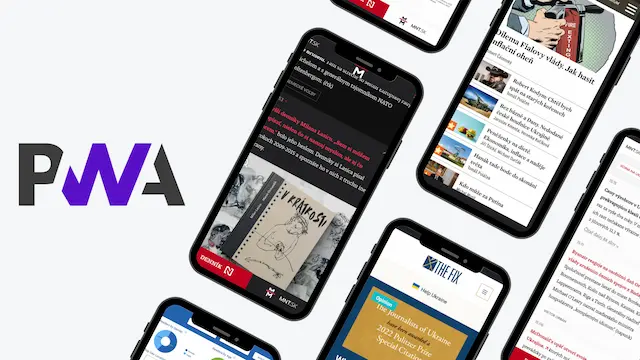
Denník N’s media reporter Filip Struhárik analyzed readership data of Slovak publishers from the last 12 months: some were down year on year as much as 74%, others 50%, 45%. All acknowledged that the drop was due to the drastic Google traffic decrease. What is their plan now? Original content AI cannot copy, building direct channels (newsletters, apps) instead of borrowed reach, diversifying revenue, and pushing to negotiate with the platforms collectively.
Full piece here
Beam+ can tell you what converted. Geneea can now tell you what it was about
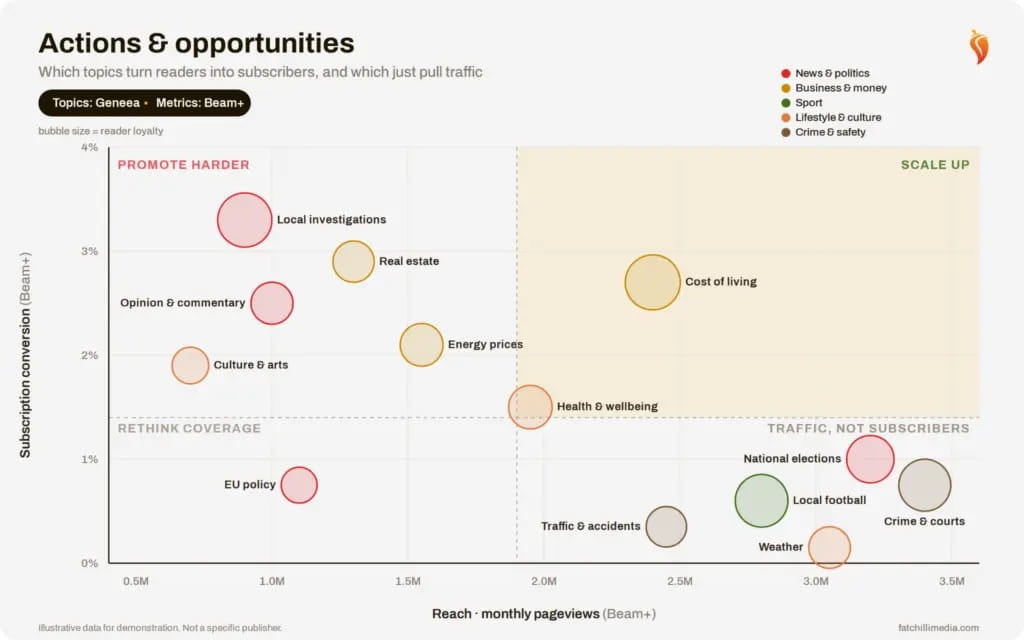
Our analytics dashboard Beam+, built for publishers, already tells you how readers move through your funnel: which articles pull in anonymous readers, which convert, which retain.
But it couldn’t understand the content itself beyond the section and headline.
So we partnered with Geneea, a Prague-based company whose AI reads an article and works out what it is genuinely about: the topics, people, and places, each tagged with a unique identifier.
Put those together, and you can finally ask which topics turn readers into subscribers, which ones are just traffic, and whether that author whose conversions dropped is underperforming or has quietly built a loyal base.
See how it works
Fail of the month: AI writing in the Financial Times
The Financial Times has an editorial code that says that generative AI must not be used to write article text for publication.
This month it had to add a note to the top of an opinion column about Trump’s tariffs by Ricardo Hausmann, professor at Harvard’s Kennedy School and director of the Harvard Growth Lab.
The note says AI was used to condense a longer draft before he submitted it.
Touch of Positivity
50,000 paid subscribers in under nine months

Reach, the UK’s largest commercial publisher and for two decades the poster child for ad-funded scale, now has 50,000 paying digital subscribers. It got there in under nine months.
The first paywall went live on the Manchester Evening News last November. Thirteen more regional sites followed. The publisher’s target is 75,000 by the end of the year.
The move away from ’volume’ traffic seems to be working. A good inspiration for the hesitant.
Stat to Steal
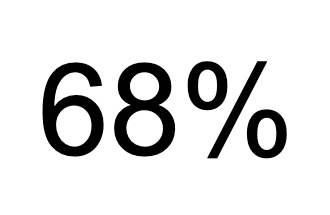
of Google searches ended without a click, largely thanks to AI features. This is the fastest the zero-click share has moved in a decade.
That’s all, folks.
Enjoyed the post? Share it.

A journalist, podcaster and audience development strategist interested in the business of news.







FatChilli's Solutions