
Hi friend 👋
Welcome back to another edition of The FatChilli Playbook. One email a month for publishers, editors and product people who think about reader revenue more than is strictly healthy. This issue is not (just) about radio. Stay with me; I will explain. It will be worth your while.
You know, for each of the past editions I looked for a joke to put in the beginning; I finally found one I like:
Why are human journalists still better than AI?
Because an AI can’t look a politician in the eye and say, “That didn’t answer my question,” 47 times in a row.
😅
David here (audience revenue & engagement at FatChilli for Publishers)
Let’s go.
Oh, and don’t forget to forward this newsletter to colleagues who might be interested. They can sign up here.
The biggest radio companies are already setting up subscription products
On 23 September, Global, the owner of the UK’s largest commercial radio company, launched its new subscription service Radio Plus. Heart, Capital, Smooth and the rest of its UK music stations, live and without ad breaks, for £4.99 a month per brand family or £9.99 for everything. More music replaces the breaks.
That is 29 million weekly listeners being asked, very politely: “Hey, want to pay us instead of listening to commercial jingles?”
Last year, Bauer Media, Europe’s largest commercial radio company reaching 63 million weekly listeners, launched its first consolidated subscription offering within the Rayo platform as Rayo Premium for £3.99 per month.
This year, Evropa 2, Czechia’s oldest commercial radio station and its second-most-listened-to station, launched Premium, a paid, ad-free version of the station inside a completely new mobile app.
Do you see a pattern here, or are we just hallucinating?

FatChilli’s cooperation with Evropa 2 started by rebuilding its web player from scratch. Then came the integration REMP, Readers’ Engagement and Monetization Platform.
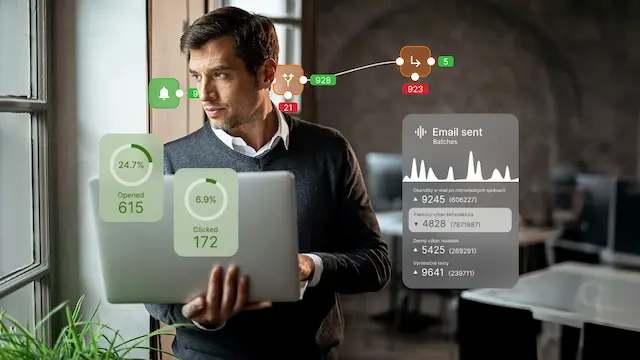
It allows the station to register new listeners on the website, send emails, track analytics and serves as the future stepping stone for launching the subscription also online.
The best part is that all data and entry points flow into a centralized CRM, enabling actual audience segmentation and personalized offers, because treating every listener like a generic anonymous IP address is so 2015.
Across Europe, audio takes roughly a fifth of media time and roughly 5% of ad spend.
I would say it is high time radios jumped on the direct audience revenue trend. The biggest ones are already on it.
Read the full Evropa 2 story
Lubor Zoufal, Chief Digital Officer, Czech News Center / Active Radio
“We started building a direct relationship with our listeners in the app. What FatChilli helped us do was bring that same thinking to the web, so signing in and being a known listener is now part of the experience there too.“
REMP, all in one for all
Here are four reasons why you should consider REMP, Readers’ Engagement and Monetization Platform:
1. Works for all: Doesn’t matter what kind of media company you are, be it digital, print, or even radio, REMP has the full suite of features to turn your audience into direct revenue.
2. The full stack: CRM for users, subscriptions, analytics, local payments, automated onboarding, and retention journeys.
3. All kinds of emails: editorial newsletters, automated emails, and lets you switch email providers without rebuilding anything.
4. Fast installs: you can choose to own the whole stack or rent it from FatChilli.
Interested?
From the Blog
Rewarded ads? Readers will hate us! 😱
Every first meeting about rewarded ads starts with the same questions.
Will readers hate it?
Will it eat my subscriptions?
Fill rates are tiny, so why bother?
Our colleague Eva has the answers, including numbers and results from five publishers who run the format.
Bonus: The article includes a calculator. Type in your pageviews, choose where to put the lock, and see if it pays off.
Read the rewarded ads Q&A
How the NY Times is owning its biggest fail
Adam Nagourney published a look at a few of the more notable mistakes The Times has corrected over the years. It’s worth a look, and it also serves as a nice retrospective of how even the best of us fail.

Btw, Nagourney is the author of the excellent NY Times history book: “The Times: How the Newspaper of Record Survived Scandal, Scorn, and the Transformation of Journalism.”
Touch of Positivity
The Financial Times had another record year. FT Group revenue grew 5% to £566m in 2025, and operating profit rose 23%. The main newsbrand now has 1.9 million paying readers.

But the real stat we’d love to steal: FT.com had more than 700,000 habitual users last year and more than a million recognised users, meaning people who have given it at least an email address.
Chief executive Jon Slade explained the logic at a Press Gazette conference this month. Most FT traffic and most of its money come from readers who seek the brand out directly. Subscriptions come first, and advertising is built on top of that audience, which he said “puts control in your hands” when third parties and technology shift.
Stat to Steal

Denník N has raised over €154,000 in just 12 days from more than 2,800 donors for its new radio station, extending the crowdfunding campaign with a new milestone to fund live morning and afternoon shows.
That’s all, folks.
Enjoyed the post? Share it.

A journalist, podcaster and audience development strategist interested in the business of news.







FatChilli's Solutions