
Newsboys. Source: Boston Public Library on Unsplash
Reach is increasingly failing as a metric. Newsrooms should start measuring reader loyalty instead.
If you were to sum up in a single word the strategy of the average news outlet and the biggest media platforms, it would be: reach. More precisely: more reach.
More uniques, more page views, more sessions, more time spent. And in that time, much of that growth has come from platforms which have also benefited from getting the news for free or later for a little money.
20 years later, the platforms continue to grow (look at Google’s, Facebook’s and YouTube’s continued revenue increase or even user growth). But newsrooms have been losing traffic, audiences, interest, trust and even subscribers. Not a pretty situation to be in.
The 2026 Digital News Report by Reuters Institute, drawn from almost 100,000 respondents across 48 markets, describes a sector that has quietly stopped chasing reach.
Its own words are worth sitting with: many publishers have “moved on from measuring audience reach as a key success metric, instead prioritising the depth of engagement with a smaller, more loyal audience.”
If you are not on the same page, you should change what your newsroom’s analytics stack is prioritising.
Subscribe to our newsletter for more publisher stories and strategies straight into your inbox.
The top of the funnel is structurally smaller
The reason reach is failing as a metric is mechanical, not philosophical. Just to state the obvious, a bigger audience gives a publisher more chances for success.
The reality is that the use of publishers’ own websites and apps has fallen by 12 percentage points since 2021, now standing at 51% weekly reach globally.
For the first time, social media and video networks (54%) have overtaken both owned properties and television (52%) as the most widely used source of news. Add AI chatbots, and the combined third-party total reaches 56%.
The Report is careful to call this a drift rather than a shift, but the direction is unambiguous, and it is happening across all age groups.
The practical consequence is that the pool of new visitors flowing into your site is shrinking, and the visitors who do arrive increasingly come from places where, in the Report’s framing, “audience intent and loyalty are lowest, and the prospects for monetisation are most challenging.” (Looking at you, Google Discover.)
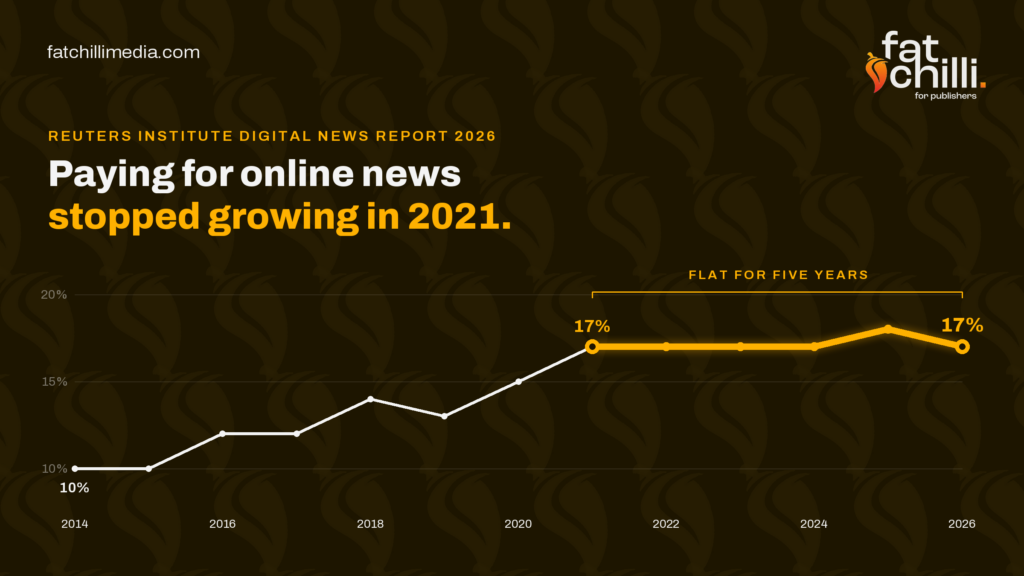
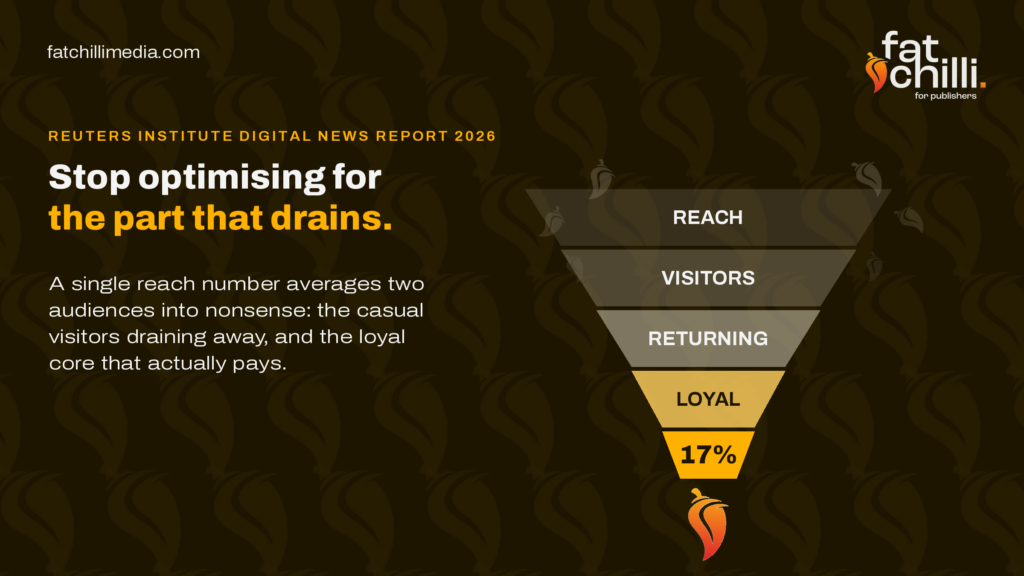
You cannot grow a loyal audience by optimising for the draining part of the funnel.
Source: 2026 Digital News Report
Related articles
Interest is falling, but the people who matter are holding firm
The second reason reach misleads is that the audience is split into two very different groups, and a single reach number averages them into nonsense.
Across the markets surveyed, the share of people who say they are extremely or very interested in news has fallen 13 percentage points since 2021, from 59% to just under 46%.
The Report’s segmentation makes the split concrete. “News lovers,” people who consume news multiple times a day with high interest, have fallen from 29% of respondents to 22%.
“Casual or passive users,” who check news around once a week with little interest, have risen from 16% to 25%.
News avoidance sits at 42%, up from 29% when the Report began measuring it in 2017.
Here is the finding that should reshape your dashboard. Even as news lovers shrink in number, they are, in the Report’s words, “relatively undiminished in their usage, engagement, and propensity to pay: a smaller, but durable, target market.”
Their interest in politics, their use of owned sites and apps, and their trust in news have all held up better than the population average.
So the audience you are losing is mostly the audience that was never going to pay, subscribe, or come back on purpose.
There is a related point about where your most engaged readers go next.
The people most likely to try AI chatbots for news are also the people most likely to pay. Among those who use AI chatbots for news, 38% are news lovers, compared with 22% of the population overall. The Report calls them power news consumers.
These are exactly the readers you want to keep. A reach number cannot tell you when they start to drift.
What a loyalty metric actually requires
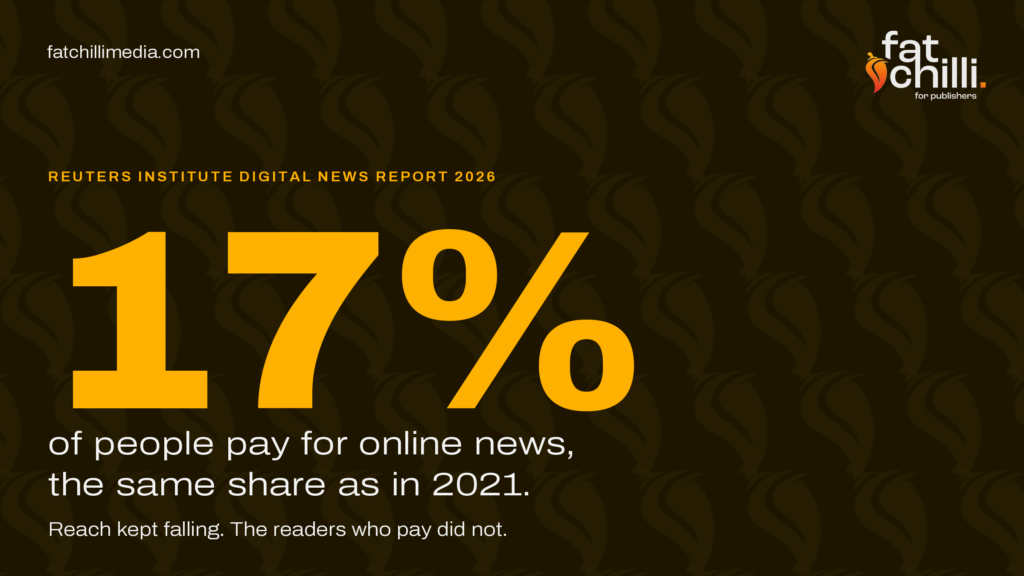
If reach is the wrong number, what is the right one? The Report points to the answer without naming a tool: depth of engagement with a smaller, more loyal audience.
To act on that, a newsroom needs three things that a page-view counter cannot give it.
First, you need to segment readers by behaviour rather than by source. Recency, frequency, and value (RFV) segmentation does for an audience what it has long done in retail: it separates the reader who visits daily and is two articles away from a subscription from the reader who arrived once from a social link and will never return.
This is the segmentation that the Report’s news-lover and casual-user split describes at a population level, applied to your own audience at the individual level.
FatChilli’s Beam+ runs RFV segmentation and loyalty scoring for exactly this reason: to give a newsroom a number that tracks the durable audience instead of the draining one.
Second, you need to detect where loyalty is forming and where it is leaking before it shows up in revenue. The Report’s data on collapsing search referral and fragile aggregator traffic (more on which in our companion piece) means the composition of your incoming traffic is changing month to month.
Beam+ includes AI traffic detection precisely because the old reach metric cannot tell you whether a strong traffic month was driven by loyal returning readers or by a temporary spike of low-intent referrals that will never convert.
Third, you need to act on the segment, not just observe it. Knowing who your news lovers are is useless if your editorial recommendations, newsletters, and onboarding journeys treat every reader identically.
ROSA, the recommendation layer in Beam+, surfaces the next relevant story for an engaged reader rather than the most-clicked story for an anonymous one.
REMP’s Campaign and Scenario Builder modules let you trigger different journeys for different segments: a soft prompt for the casual reader, a tailored offer for the reader whose loyalty score says they are ready, a retention touch for the loyal subscriber showing early signs of drift.
Related articles
The strategic reframe
The Report frames the choice facing news leaders plainly. They can keep battling for a share of attention in third-party environments where intent and loyalty are lowest, or they can focus on maximising “the engagement and value of the smaller but more loyal audience which continues to read, watch, and listen to news organisations’ own outlets.”
Don’t get me wrong, striving to grow your audience is a valid strategy; the point of this take is not to discourage that effort, mainly to deprioritise it and focus on what the current drift in audience behaviour is signalling.
New readers still have to come from somewhere, and acquisition still matters. It is an argument against reach as the metric you manage to.
A reader who arrives, reads, returns, subscribes, and stays is worth a number that page views cannot express.
A newsroom that measures loyalty can distinguish its valuable readers from its visitors. A newsroom that counts reach cannot.
The 2026 data allows publishers to stop chasing a number that has failed to grow for five years and to start measuring the one that pays.
The instruments to do it (behavioural segmentation, loyalty scoring, traffic-quality detection, and segment-aware engagement) already exist. The Report’s contribution this year is to remove the excuse for not using them.
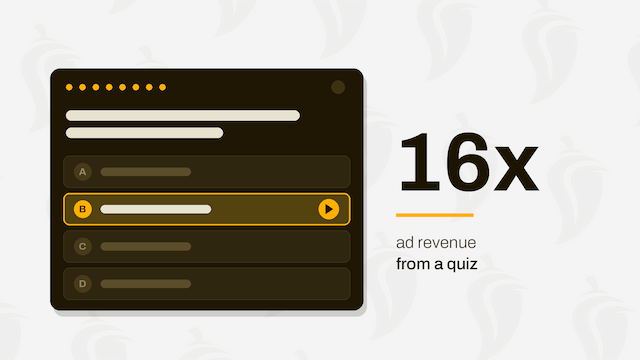
Final note: OK, but what if we haven’t been focusing on audience revenue and we still depend heavily on ad revenue, i.e. reach and pageviews? I have an answer for that. Find out whether you have been monetising your current traffic well. In our experience, most publishers have not set up their ad stack well and are easily losing a third of the potential revenue. Even using innovative ad formats like rewarded ads for web with high CPMs is still a novelty. Yet, publishers we have worked with and implemented the format have hailed how well it performed while keeping audiences happy. Below are a couple of examples, and if you feel you might be missing out, reach out to us.
Enjoyed the post? Share it.

A growth strategist passionate about helping publishers boost their revenue.












FatChilli's Solutions