
How Denník N monetised Google Discover traffic via rewarded ads
A subscription-first newsroom turned its hardest-to-convert traffic into a new revenue line with rewarded ads for the web. Revenue has grown more than 1200% in under six months, without adding traffic and without costing a single point of engagement.
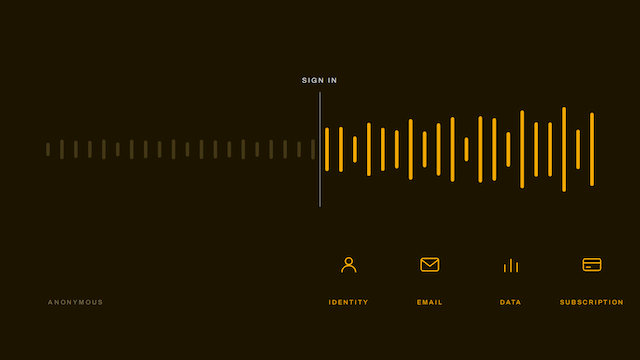
Every subscription publisher has a version of the same quiet problem. A large part of your audience will never pay you directly. They usually come from algorithmic feeds, skim one story, and leave. You can keep pushing subscription prompts at them, but you already know how that ends.
For Denník N, the Slovak independent daily behind the REMP platform and one of the region’s subscription success stories, that slice has a name: Google Discover traffic.

A large share of our Google Discover readers were never going to become subscribers. On the revenue side, that traffic was close to invisible. Rewarded ads let us finally earn from it, without putting a single extra prompt in front of the readers we are actually trying to convert.
Tomas Kalman, head of sales, Denník N
Google’s not-so-new traffic generator for publishers has been a godsend to some outlets after Facebook gave up on news. Instead of gaming the Facebook algorithm, the same traffic-hunters have been chasing a new mystic source.
Discover generally sends large volumes of logged-out, one-article readers, the kind who rarely convert into paying members (“never” would be the answer if you asked most publishers). Worse, the traffic is notoriously slippery to even measure.
So Denník N asked a simple, practical question, the kind FatChilli likes best: if these readers are never going to subscribe, and they cost us nothing to keep, how do we earn something from them without spending months chasing conversions that were never coming?
The answer turned out to be rewarded ads for the web.
Subscribe to our newsletter for more publisher stories and strategies straight into your inbox.
A value exchange, not a payment
If you have not come across rewarded ads on the web yet, the idea is simple. Instead of asking a reader for money, you ask for their attention. When a reader hits a content lock, they are offered a choice: watch a short ad, and the article unlocks. No credit card, no account, no commitment. The currency is time and focus, and the reader decides whether to spend it.
My first concern was always going to be the reader. What convinced me is that this is something the reader chooses. Nobody is ambushed. They decided to watch an ad to keep reading, and our engagement numbers went up, not down, while it was running.
Tomas Kalman, head of sales, Denník N
That opt-in design is exactly why the format suits Discover readers so well. A casual, one-time visitor is the last person who will hand over card details, and the first person a hard paywall will bounce. A small, voluntary trade fits them far better than a subscription pitch they would always decline.
FatChilli set the format up to touch one segment only: non-logged-in visitors arriving from Google Discover. That targeting matters.
Paying members never saw it. The subscription funnel was left completely alone, and the only readers in scope were the ones who were generating nothing in the first place.
Launch, then learn
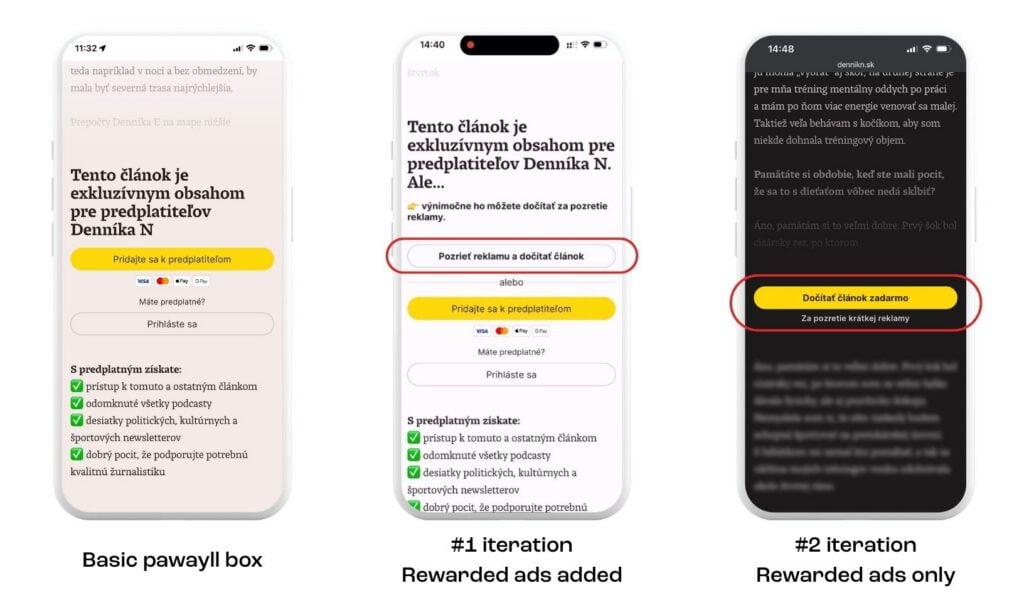
Here is the part most “we turned on a format, and revenue exploded” stories skip over: the launch itself was unremarkable (see first chart below).
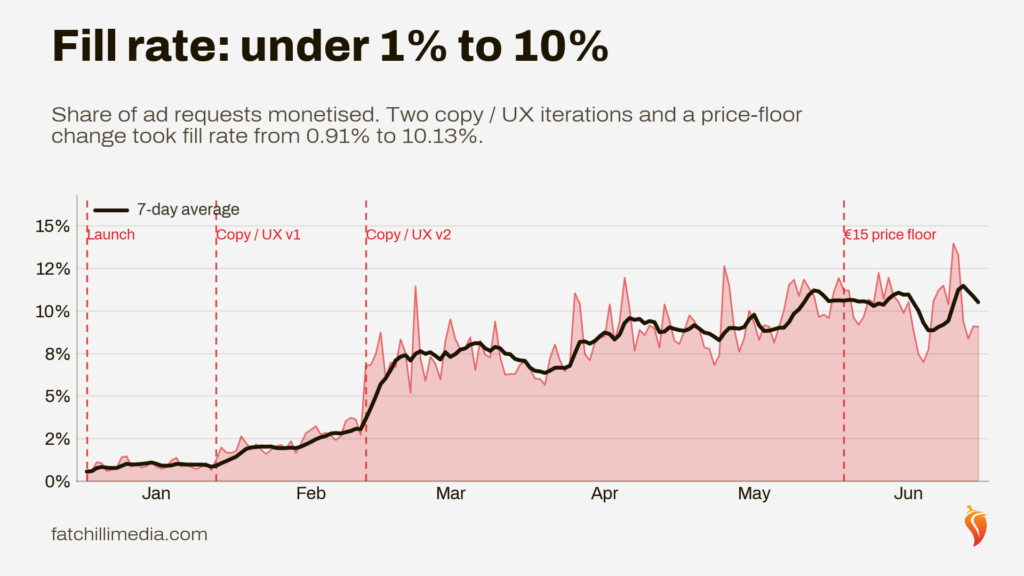
Rewarded ads went live in late December 2025. For the first four weeks, the format barely worked. Fill rate sat at 0.91%, meaning roughly one ad request in 110 was actually monetized.
What changed everything was not the format. It was the iteration.
In mid-January, FatChilli rewrote the unlock prompt and reworked the overlay design. Small stuff, on paper. The result was not small: fill rate more than doubled, and daily revenue jumped 264%. Still, that wasn’t enough, and we know that there is much more potential.
A second round of copy and design changes in February did it again, tripling fill rate to 7.54% and pushing daily revenue up another 125%. Two rounds of wording and layout had taken the fill rate from under 1% to over 7%, on the same audience.
This was not our first rodeo, and we have seen rewarded ads on the web work across different regions and various publishers. So there was enough belief that the problem wasn’t the audience but the issue lay elsewhere.
With conversion finally healthy, FatChilli turned to pricing. Rewarded inventory tends to command far higher eCPMs than standard display, often ten times higher or more, so the price floor is worth getting right.
The team ran a clean 50/50 test, half the traffic at a €10 floor, half at €15, and let the numbers decide. The €15 floor won and went live across all the traffic on 19 May.
The results: same readers, 13x the revenue
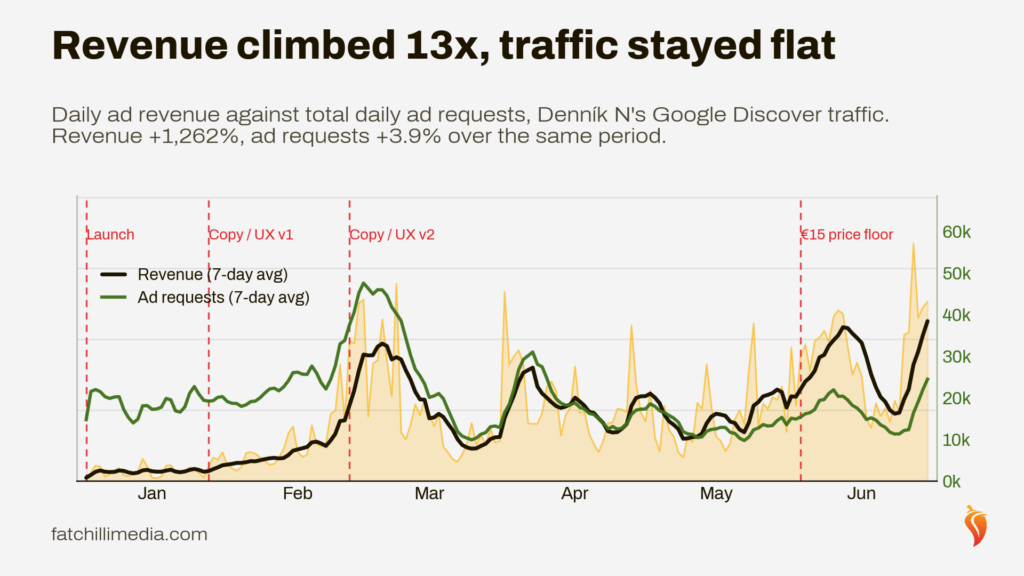
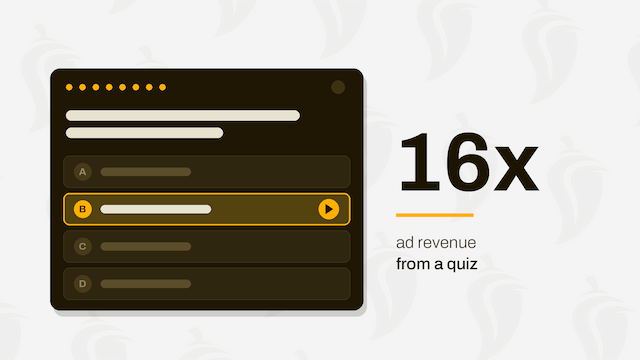
Comparing the launch month with the most recent comparable window in June, the rewarded ads revenue jumped more than 1200%. RPM, the revenue earned per thousand ad requests, and the cleanest measure of how well each visit is working, climbed more than 13 times the yield from the same kind of traffic.
And it really was the same traffic. Ad requests, the proxy for eligible visits, grew less than 4% across the whole period. The revenue did not come from more readers or more ad slots. It came almost entirely from monetizing the readers already there.
The price floor test tells the story of how not just iterating on how the offer is presented, but you need an expert team with experience to maximise the revenue.
Comparing two equal 27-day windows before and after the €15 floor, revenue almost exactly doubled (+99.7%), eCPM rose 28%, and, counterintuitively, fill rate went up rather than down.
A higher floor did not scare off demand. It simply captured more of the value that was already in the room.
A fair caveat, because FatChilli says it to every publisher: rewarded ads are still a young format. Fill rates usually live in the single digits or low double digits, and results come from active management and a willingness to iterate, not from flipping a switch.
Denník N’s 10% fill rate is strong precisely because it was earned over six months of tuning.
Rewarded ads improved reader engagement
For a newsroom that lives on subscriptions, the real question about any ad format is not how much it makes. It is whether it costs you readers. This is where the data gets genuinely interesting, because it points the other way.
Across the same period, every engagement metric for this audience improved. Bounce rate fell from 32% to 27%. Average time on site rose by 42 seconds. Pages per session went up. Readers did not tolerate the format. They engaged more while it was running.
The behaviour inside the ad says the same thing. Once a reader opts in and the ad opens, completion runs consistently above 95%. The people who chose to watch also finished.
There is no mystery to it. Rewarded ads are not forced on anyone and never ambush the reader. They summon it themselves.
Knowing exactly what is coming and what they get for it, they know the ad will play, they know why, and they know the value waiting on the other side.
It is a trade the reader agreed to, not an interruption they endured, and that single difference is why it reads as fair rather than annoying.
Related articles
What Denník N’s results mean for other publishers
- Traffic that never subscribes is not worthless. It is unmonetized. Discover and similar non-loyal sources are easy to write off because they do not convert. Rewarded ads earn from that exact segment without ever touching your subscription funnel.
- With rewarded ads, copy and UX are the levers. Two rounds of prompt and overlay changes took the fill rate from under 1% to over 7% on the same readers.
- A higher price floor can lift revenue when demand is there. Moving from €10 to €15 nearly doubled revenue and raised fill rate. Test it rather than assuming that a higher floor will cost you fill rates.
- Done right, the format is good for the reader relationship, not bad for it. Opt-in and transparent beats forced and intrusive. Bounce fell, time on site rose, and more than nine in ten readers who started an ad finished it.
- The result came from management, not magic. The launch was flat. Six months of iteration is what turned it into a 13x outcome.
Related articles
Enjoyed the post? Share it.

An expert specializing in helping digital publishers to drive revenue with smart monetization strategies.











FatChilli's Solutions