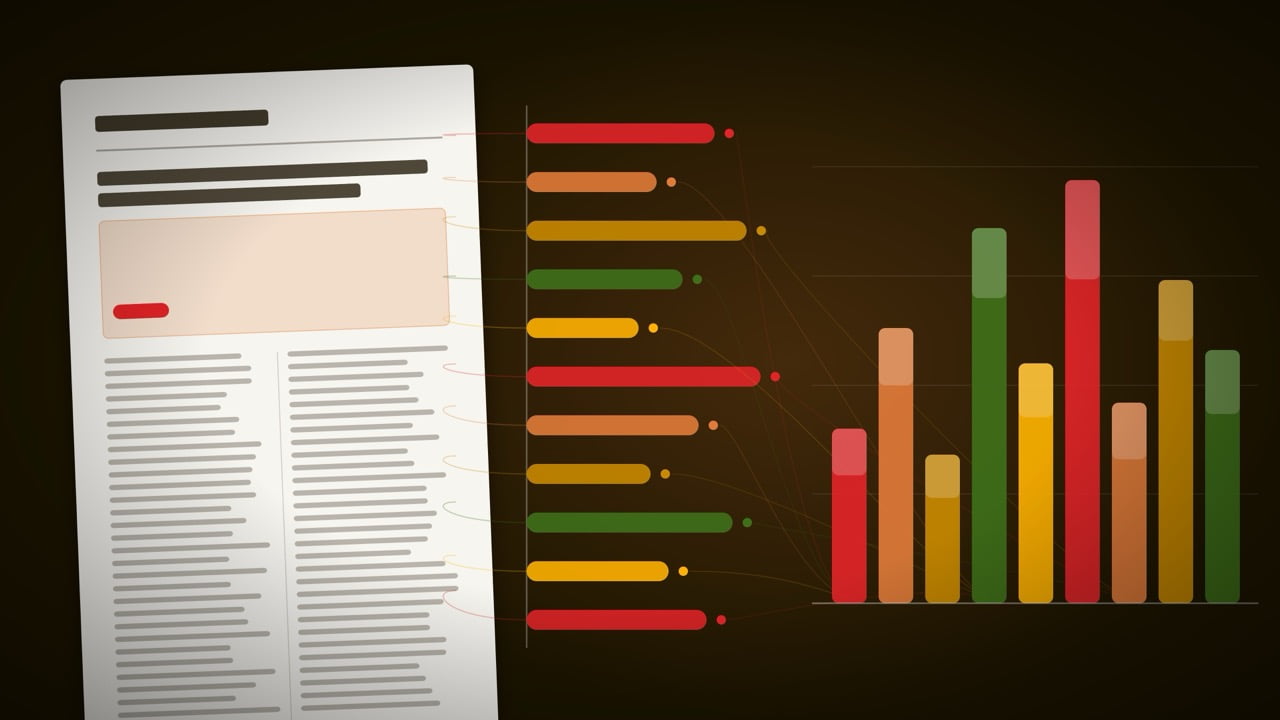

Stop guessing why articles perform well. Learn how Geneea’s AI content tagging and FatChilli’s analytics help newsrooms turn readers into loyal subscribers.
Most newsrooms can already tell you how an article performed. Page views, time on page, scroll depth, conversions: the dashboards are full. What they often cannot tell you is the reason – why it performed the way it did.
The one thing missing from most analytics setups is a precise, structured understanding of what the article was actually about. That gap is exactly where Geneea and FatChilli have started to join forces.
Geneea is a Prague-based company building AI tools for media, with a focus on text (and increasingly audio). FatChilli builds the analytics and reader-revenue layer publishers use to turn that activity into loyal, paying audiences through Beam+ and REMP, the Readers’ Engagement and Monetization Platform.
Put the two together, and a publisher can stop guessing at the link between content and outcome, and start measuring it directly.
Subscribe to our newsletter for more publisher stories and strategies straight into your inbox.
What Geneea does: the superpower of understanding semantics and how to deploy it
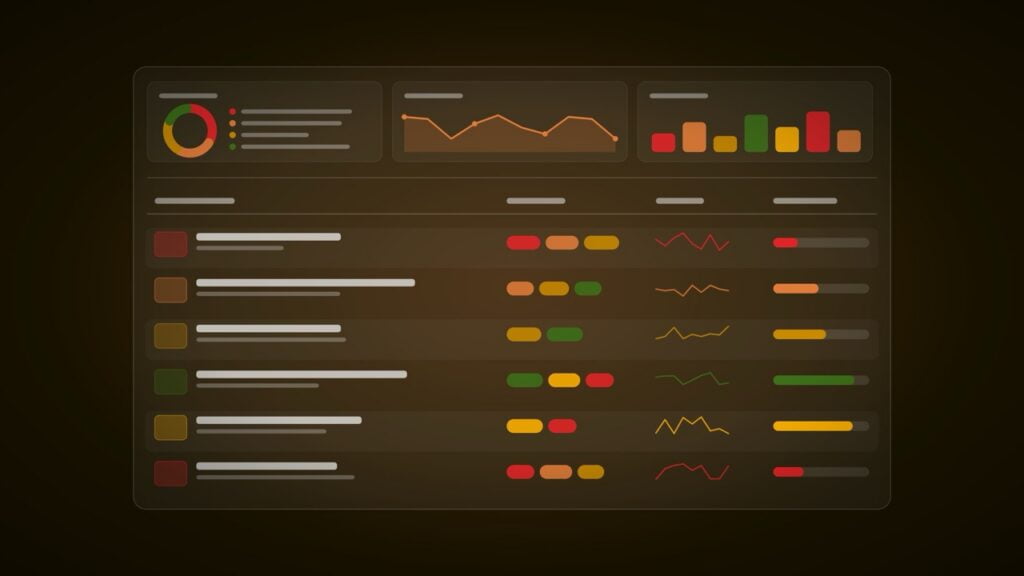
Geneea describes itself plainly: AI solutions for media, built around understanding text and, where needed, audio. In practice, that breaks down into a few core services.
“We extract metadata and can tell you far more about an article than just its section: the topics, the people, the places it’s really about. The moment that lives inside the analytics, a publisher can decide what to write about and what to drop, based not on a single article but on patterns across authors, themes, and entities. That’s the layer we think is missing today, and it’s exactly where joining forces with FatChilli makes sense,” told us Petr Hamerník, one of the co-founders at Geneea.
At the foundation is a system that reads an article and works out what it is about: the key topics, the entities (people, organizations, places, products, events), and the categories it belongs to, whether that is football or a financial story.
Each article can be assigned a small set of reader-facing tags, the kind that help with navigation, related content, and discovery surfaces like Google Discover.
Underneath that sits a much richer layer of automatic tagging used for analytics and personalization, drawing on a knowledge base of roughly 12 million entities covering the entire world.
A detail that matters here: the tags are not just free-text keywords. Each is linked to a unique identifier and enriched with structured data, including Wikidata links, so the same concept is recognized consistently across spelling variants, editorial styles, and even languages.
“Anyone can throw an article into an LLM and get keywords back. It looks nice. The problem starts when you do it for a publisher producing thousands of articles a day, and nothing is comparable: sometimes three tags, sometimes five, ‘USA’ one time and ‘United States’ the next. What we guarantee is that it’s standardized, so you can genuinely compare your French production with your German production, because the same entity carries the same identifier in every language,” explained Jirka Hana, another co-founder at Geneea.
But that’s not all. A newsroom assistant recommending relevant related articles, a research assistant as a Perplexity-style tool on top of the media’s own archive. Or an article generator tool that existed before LLMs, but has gotten way better now thanks to recent AI improvements, are just a few of the products Geneea has come up with.
Four publishers stories
Vltava Labe Media (VLM) is one of the largest publishers in the region, with 70 regional newspapers and 16 magazines, and web properties drawing around 5.5 million unique readers a month. Tagging used to be manual many years ago, inconsistent, and applied only on some sites.
Geneea analyzes every article automatically and assigns consistent tags across all of VLM’s websites since 2018.
The publisher reported saving an average of three minutes per article, which adds up to roughly 900 hours a month, and the more consistent tagging has unlocked more detailed traffic analysis on top of better reader navigation.
The Czech News Agency (CTK) uses Geneea’s natural language generation to cover elections in real time. During an election, CTK can produce well over a hundred reports in a matter of minutes (530 reports for some election types, peaking at roughly one article per second), all following the agency’s style guide, with no typos and perfect grammar.
The point was never to replace journalists: by handing the repetitive work of reporting numbers to the system, reporters were freed to concentrate on reactions, analysis, and post-election negotiations. The same setup now also handles routine recurring reports such as fuel prices and car accident summaries.
Radio France worked with Geneea through its Sandbox innovation program to “geo-document” its broadcasts. The local station France Bleu Drôme Ardèche wanted to know whether it was genuinely covering its whole region or over-indexing on a few places.
Geneea’s pipeline transcribes the daily audio, identifies the locations mentioned (it can recognize nearly 35,000 French communes), and enriches the results with statistical codes, population data, and links back to the original recording, presented as daily maps and reports.
The shows mention around three locations a minute on average, and the station can compare coverage against population to make sure it is serving all of its listeners, not just the loudest ones.
Newton Media, the CEE media-monitoring leader, processes more than two million articles and social posts a month across six languages.
Integrating Geneea’s entity recognition cut processing and classification time by 67% and improved entity-recognition precision by 43% against previous methods. The enriched metadata powers new capabilities in Newton’s NewtonOne app, such as influence-network mapping and sentiment tracking over time.
While these case studies highlight a few specific implementations, Geneea’s solutions are used by leading publishers worldwide; including The Atlantic, Mediahuis, RTS, Tamedia, and The Hindu.
Related articles
Partnering for better results for the newsrooms
A common thread runs through all four: the value is not in the raw tags; it is in what becomes possible once content is structured consistently and at scale. That is precisely why we partnered with Geneea to enrich Beam+ data and deliver more precise insights for newsrooms.
“Beam+ allows us to do deep analysis. For example, seeing which topics or authors our ‘lovers’ [most loyal readers] read the most, and how deeply they engage. But there is a massive amount of data in Beam+. I couldn’t handle it through the dashboard alone and needed to use AI as an assistant to get better insights,” was the feedback from one of the publishers currently piloting our latest Beam+ features.
And now imagine you could get even better results within Beam+ with the combination of first-party data and Geneea’s industry-leading semantic understanding.
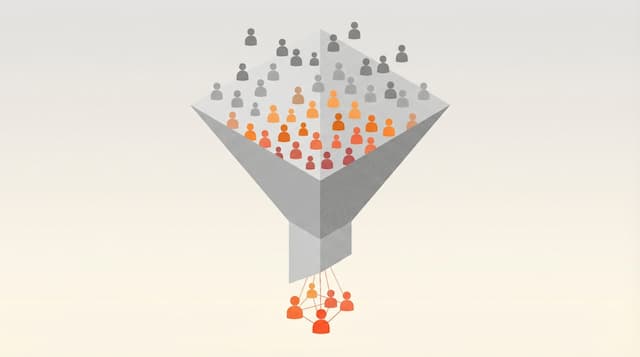
Beam+ already gives publishers a deep view of performance: how readers move through a conversion funnel, which articles pull anonymous readers into regular visitors, which ones convert to subscribers, and how authors, sections, and segments behave over time.
What it does not do on its own is understand the content at a granular level: what each article is genuinely about, beyond its section and headline.
Geneea fills exactly that gap.
“We’re not trying to do what FatChilli does. They own the funnel and the segments. We know a huge amount about the content; they know a huge amount about performance. Put those together and you can ask which author, which topic, which location actually converts a reader from one stage to the next, and finally get an answer,” Petr Hamerník explained.

Feed Geneea’s structured understanding of content into Beam+ analytics and a publisher can ask a fundamentally better class of question:
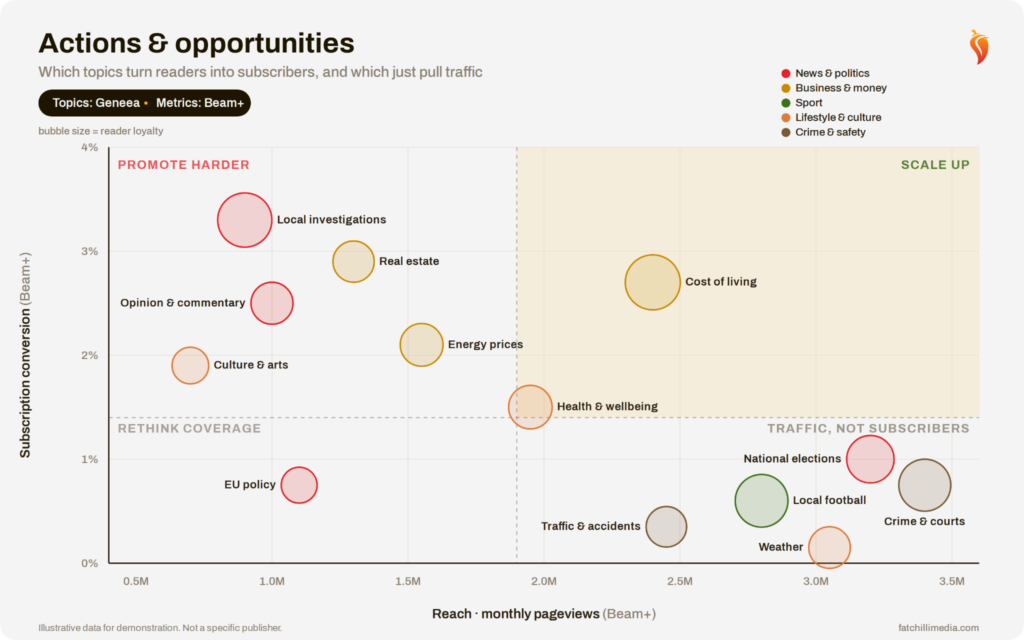
Which topics convert?
- Cross-reference a constrained taxonomy like IPTC Media Topics (around 1000 categories in a four-level hierarchy) against subscription conversions, and you can see which themes turn readers into paying subscribers, and which ones nobody wants to read.
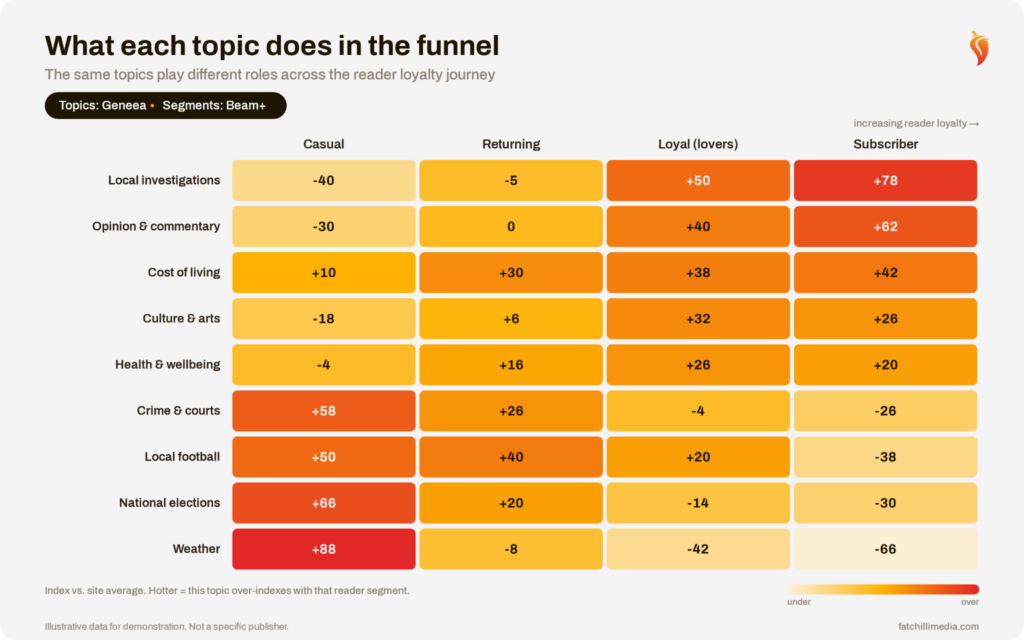
How do different topics affect the funnel?
- Different content does different jobs: some articles bring new audiences in, some bring them back, others convert or retain subscribers who are already paying. Tagging lets you separate those roles instead of treating all “good” content as the same.
Which entities, people, and places move the needle?
- Because entities are structured, you can filter by them. Does coverage of one car brand convert better than another? Do certain regions, mapped through Geneea’s geo-hierarchy down to district level, perform differently, and how does that compare to population? Geneea has already run exactly this kind of population-versus-coverage analysis for newsrooms.
How do you assess an author’s long-term performance?
- A classic hard case: an author whose articles stop converting may not be failing at all. They may have built a loyal subscriber base that keeps coming back. Structured content plus Beam+ retention data is what makes that distinction visible rather than guessed at.
Geneea’s contribution is standardization: consistent, comparable, identifier-linked output that holds across an entire multilingual archive. Sounds like an understatement; it is not.
If you are a publisher sitting on a rich archive and a full analytics dashboard, and you have ever looked at the numbers and thought I can see what happened but not why, reach out.

Are you ready to take your newsroom’s analytics to the next level? Get in touch.
Enjoyed the post? Share it.

A journalist, podcaster and audience development strategist interested in the business of news.












FatChilli's Solutions