As rewarded ads on the web are not yet widespread and many publishers have many questions, here are answers to the most common inquiries.
In the first full month after Techbox handed its ad operations to FatChilli and moved onto a custom Google Ad Manager setup, 1.4% of its ad impressions produced 31.8% of its programmatic revenue. Ad request volume barely moved: same site, same readers, same inventory.
What changed was that Techbox started using rewarded ads.
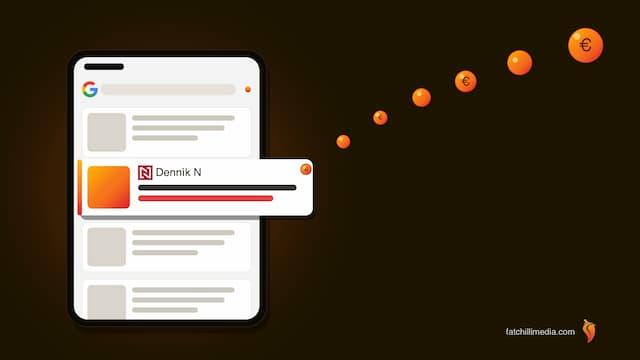
For months, Denník N, the leading independent publisher in Slovakia, struggled to monetize its Google Discover traffic well. Pageviews did not convert into subscriptions, and ads did not make meaningful revenue.
After setting up a soft lock with rewarded ads, the revenue from Discover jumped. The Maltese investigative platform The Shift News had a similar experience after setting up rewarded ads.
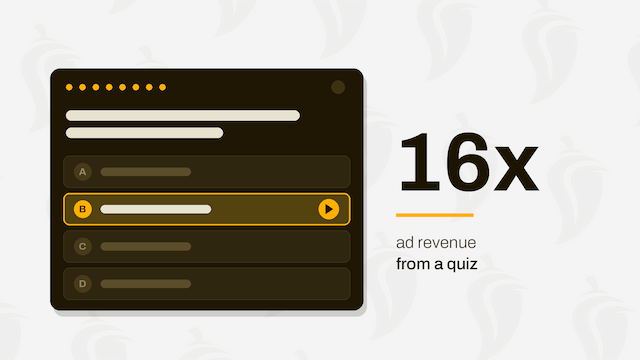
You can’t use rewarded ads only for soft-locked articles; the Czech arm of German Burda publishing tried rewarded ads on their quizzes, and eCPM jumped 16x compared to Burda’s standard programmatic display.
Below are the questions we get asked in every first meeting, answered with numbers from publishers who have run the format rather than with theory. Everything here comes from case studies we have published, all linked at the end.
What could rewarded ads earn you?
Pick where you would put the lock and tell us your traffic.
Estimated extra ad revenue
€4,989
per month, or €59,863 a year
These are FatChilli estimates, drawn from tests and experiments run with publishers across our network. They are not a quote. Your own numbers will move with your market, your traffic sources and the wording on your lock.
This revenue sits on top of what those pages already earn from display.
Subscribe to our newsletter for more publisher stories and strategies straight into your inbox.
The basics
What are rewarded ads on the web?
A reader hits a lock. Instead of a price, they are offered a trade: watch a short ad, and the thing they wanted opens: no card, no account, or registration. The currency is a few seconds of attention, and the reader decides whether to spend it.
Two things separate it from everything else in your stack. Nothing autoplays and nothing appears uninvited, so the reader reads the offer and clicks. If no advertiser bids above your floor, the lock will not appear at all.
What happens if there is no ad to show?
The content opens normally. The gate is conditional on demand, which is the single biggest difference from a paywall. Readers never hit a dead end, and that is why the format can sit on top of free content.
How is this different from an interstitial?
An interstitial appears without asking. That one difference cascades through every metric that follows: whether the reader watches to the end, what an advertiser will pay, and whether Google treats the placement as intrusive.
Is it only for video?
No. Rewarded supports video and display demand by default. A display creative has to stay in view for at least five seconds before the reward is granted.
What does setup involve?
A piece of JavaScript in the header. Everything the reader sees is yours to design.
Balint Barak, CEO of Parameter, put the implementation cost at “a couple of emails.” The setup is the easy part. The tuning is the work, and the rest of this Q&A is mostly about that. Parameter has seen a 25% increase in eCPM thanks to rewarded ads.
The ad revenue from rewarded ads

What do rewarded ads actually earn?
At The Shift News in Malta, an investigative outlet that soft-locks articles after the fourth paragraph, the rewarded CPM ran north of €40. Average CPM across the whole site nearly doubled, up 90% month over month, and total ad revenue grew 68%.
At BurdaMedia Extra in Czechia, rewarded ads on Marianne’s quizzes earned roughly sixteen times the eCPM of the publisher’s standard programmatic display. Rewarded eCPM sat at €28.43.
At Parameter, a Hungarian-language regional outlet in southern Slovakia facing a 40% year-on-year decline in display revenue, two months of rewarded ads lifted eCPM more than 25% and overall revenue 26%.
The premium is not mysterious. The advertiser is buying a full-screen unit, on a device held by someone who asked for it, and who will almost certainly watch to the end.
Viewability across Burda’s portfolio ran at 98.81%. Of the readers who pressed play on Marianne, 96% finished. At The Shift, 99% finished.
Fill rates are in single digits. Doesn’t that kill the case?
Across our tests with various publishers, we have seen fill rates ranging from single digits to 70%. Denník N reached 10% after six months of tuning. The Shift News saw the lock appear in under 10% of eligible sessions, meaning more than nine sessions in ten carried no lock at all. On Marianne’s quizzes (BurdaMedia Extra in Czechia), 66.7% of ad requests were filled.
How do I work out what it is worth to me?
Revenue per 1,000 pageviews = fill rate × open rate × eCPM.
The money is earned when the reader opens the reward, and it stays earned whether or not they watch to the end. Completion runs at 95% or better everywhere we have measured it. Try the calculator above to see how much you could earn with different types of content.
Where should I set the price floor?
A higher floor refuses cheap bids and captures more of the value already in the room. Our colleagues are always happy to guide you towards the best results.
Can I sell rewarded inventory directly?
Yes. Google Ad Manager carries it.
How much traffic do I need?
We work with sites from 10,000 monthly pageviews.
The reader reaction to rewarded ads

Will readers hate it?
They opt in, or they do not. At The Shift News, a quarter of the readers who met the lock chose to watch. At Burda, three in five did. Nobody is forced into anything.
Does it cost me engagement?
In all our tests, we haven’t seen any meaningful decreases across many different publishers. On the contrary, metrics improved thanks to readers spending more time on the website because of rewarded ads.
Denník N measured the segment before and after. Bounce rate fell from 32% to 27%, average time on site rose by 42 seconds, and pages per session went up. Burda’s quiz pages with the locker on them outperformed the pages without it, with bounce down and engagement time up. The Shift News saw slightly more time on site and more pageviews per user. Techbox monitored bounce rate and time spent; found no change at all.
The larger reason is the one Tomas Kalman, head of sales at Denník N, landed on: “My first concern was always going to be the reader. What convinced me is that this is something the reader chooses. Nobody is ambushed.”
Does it hurt SEO?
The lock is a front-end overlay, not a structural barrier, and content stays crawlable. Burda measured Core Web Vitals through the test and saw them improve.
How to make rewarded ads work?

Where should the lock go?
The reward has to be the thing the reader came for. Every implementation is a variation on that one principle.
Article conclusion. The story loads; the last section does not. The Shift News locks after four paragraphs, which is enough for an engaged reader to want the ending.
Related content. Every article is free, but clicking through to a second story triggers the offer. Parameter chose this because its readers average more than ten visits a month, which puts it among a handful of Slovak sites with that kind of loyalty. The format converts habit.
Session pass. One ad buys unlimited access for the session or the day. The closest direct substitute for a paywall, and the natural first step for a publisher not ready to ask for a credit card.
Interactive content. Quizzes, calculators, personality tests, compatibility checkers, score reveals. Burda’s numbers came from here, and the wider point is that a category of content publishers abandoned around 2018 is now worth writing again. A quiz that earns sixteen times a display banner is a different editorial proposition than a quiz that earns nothing.
Utility output. Recipe method, ingredient list, the map in a city guide, the comment section, the file at the end of a conversion tool.
Will it cannibalise my subscriptions?
Denník N is one of the region’s subscription successes, and it had the problem every subscription publisher has: a large slice of the audience will never pay. In its case, that slice arrived from Google Discover; logged-out users read one story and left. FatChilli scoped the format to exactly that segment. Members never saw it. The subscription funnel was left alone.
How long before it works?
Immediately.
Denník N’s launch was flat. For four weeks fill sat at 0.91%, roughly one request in 110. In mid-January the team rewrote the unlock prompt and reworked the overlay, and fill more than doubled, with daily revenue up 264%. A second round of copy and design in February tripled fill to 7.54% and added another 125%.
Over six months, RPM on that traffic climbed more than thirteen times. Ad requests grew less than 4%. None of it came from more readers.
So what actually moves the numbers?
The copy on the lock. Two rounds of rewriting took Denník N from under 1% fill to over 7% on the same audience.
If completion is above 95%, which it almost always is, the ad is not your problem. The open rate is, and the open rate lives in how you word the offer and in the quality of what sits behind it. A quarter of readers opened the offer at The Shift News. Three in five did on Burda’s quizzes, because a quiz is a page where the reader has already said what they want.
What should I do first?
Get in touch, and our team will discuss what will be the best course of action for your website.
The case studies behind these answers
- How less than 2% of ad impressions delivered nearly a third of Techbox’s ad revenue
- The frictionless paywall: How Parameter monetized reader loyalty without credit cards
- This new approach to article lock kept it free, yet resulted in higher conversions and increased revenue
- A quiz worth 16 display banners? Unlocking the revenue potential with rewarded ads
- Same traffic, 13x the revenue: how Denník N monetized the Google Discover readers who never subscribe
Enjoyed the post? Share it.

An expert specializing in helping digital publishers to drive revenue with smart monetization strategies.










FatChilli's Solutions