

REMP LemonSqueezy brings publishers onto one shared, tested version of REMP, with fewer incidents, faster support and one team responsible for the service.
REMP LemonSqueezy changes how FatChilli develops and runs REMP – Readers’ Engagement and Monetization Platform.
Instead of maintaining a separately customized installation for each publisher, we now develop, test and support one shared platform that each publisher configures to fit their needs.
For publishers, that means a more stable service, faster support, and new features that reach everyone at the same time.
REMP explained
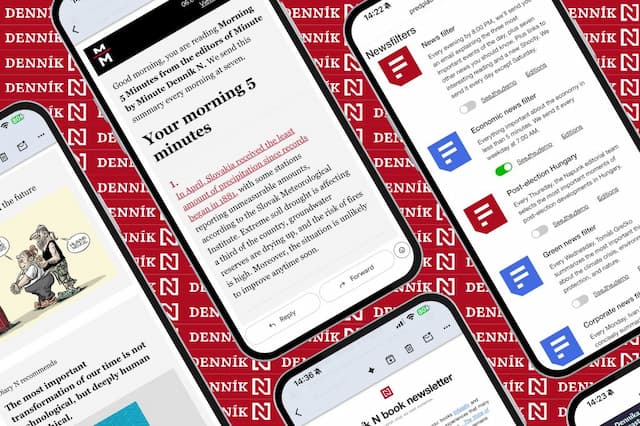
REMP is an open-source platform for subscriptions, memberships and other forms of reader revenue. It was originally built by the Slovak daily Denník N. Since 2021, FatChilli has implemented, extended and operated it for publishers across Europe, including publication such as the Austrian Falter, Croatian Telegram.hr, Czech Reportér Magazín or Slovak daily SME. Publishers use it to manage subscribers and payments, run paywalls and on-site campaigns, and send emails.
Why the old model reached its limit
Until now, every REMP installation we ran was tailored to the publisher using it. That flexibility was one of REMP’s strengths, and many individual requests grew into features that are now part of the platform.
Over the years, though, each installation developed its own configuration, its own version and its own history. Before making even a small change, our team first had to understand what was specific to that installation and what else the change might affect. Analysis and testing took longer, and so did delivery. With every new difference, the risk that an update would cause unintended side effects grew.
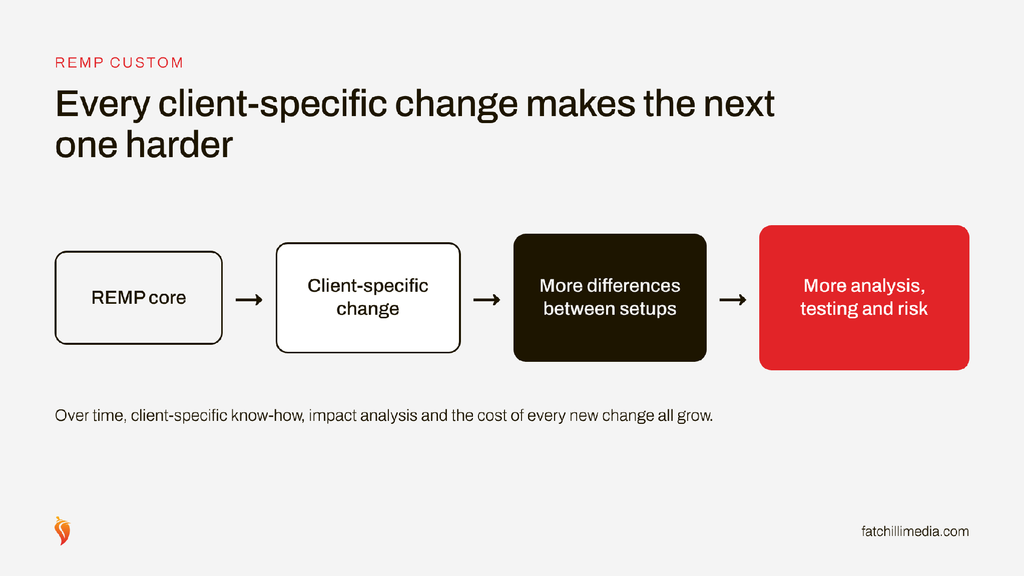
Every customization made sense when we built it. Over time, though, the hardest part of a small change was no longer writing the code. It was understanding which version of REMP we were about to change.
Tomáš Veress, CTO, FatChilli
REMP LemonSqueezy: one shared platform, configured for each publisher
REMP LemonSqueezy is a single platform that we develop, test, release and maintain continuously. All publishers run the same modules. Where a publisher needs different behaviour, we handle it through configuration and standard module options rather than separate code.
This also changes how we treat new requests. Instead of building a change for one publisher, we look at how it fits the platform as a whole. A feature that helps one publisher usually helps others, so we build it once and make it available to everyone.
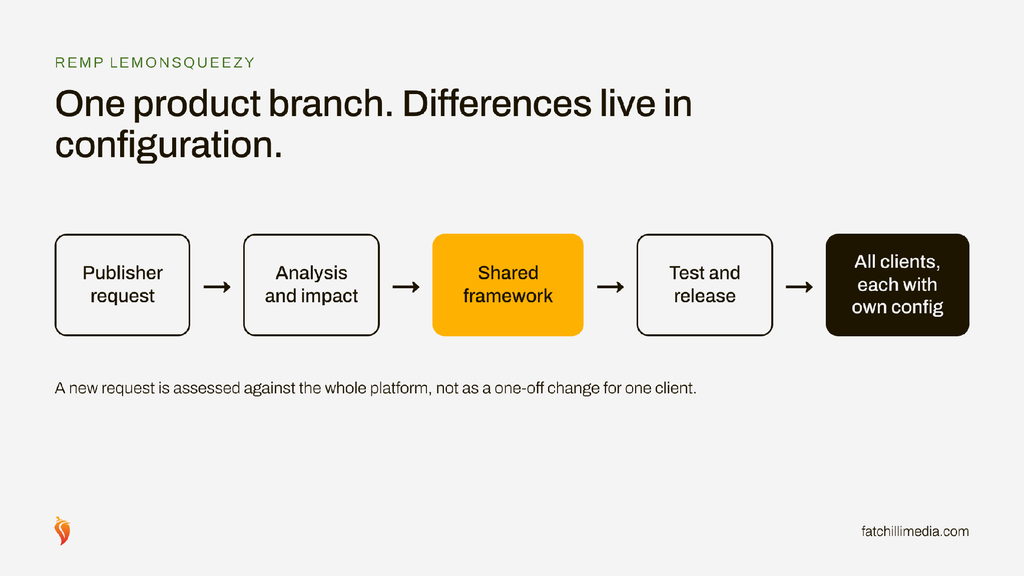
We are not taking flexibility away from publishers. We are moving it into a place where we can test it properly, so a good idea built for one newsroom can benefit all of them.
Tomáš Veress, CTO, FatChilli
One team responsible for the whole service
The REMP core remains open source, and publishers keep full access to it. What changes is the scope of FatChilli’s responsibility.
Previously, we supported the modules and integrations we built on top of the core, while issues that originated in the open-source core itself were handled as separate requests.
With REMP LemonSqueezy, we take operational responsibility for the entire service: the core, the modules and the integrations between them. When something goes wrong, publishers have one point of contact, wherever the cause lies.
A shared platform also makes prevention easier. Every release is tested across the platform before it ships. Monitoring is tuned to how the platform is known to behave, so real problems stand out from background noise. When an alert fires, our technical helpdesk picks it up straight away, starts the diagnosis, carries out recovery steps and escalates to engineers when needed.
When a payment flow stops working, a publisher shouldn't have to wait while we work out whose code is at fault. With REMP LemonSqueezy, it is one service, and keeping it running is our responsibility.
Tomáš Veress, CTO, FatChilli
What changes for publishers
- A more stable service, with fewer unexpected side effects after updates.
- Faster support, because our team works with the same modules across every client.
- A library of ready-made modules that can be switched on through configuration, at a lower cost than building the same feature from scratch.
- Room for specific needs: when a request has value beyond one publisher, we develop it as a maintained part of the platform.
- Platform improvements reach every publisher at the same time.
- Service level agreements available in several tiers.
The first results are encouraging. Among publishers already running REMP LemonSqueezy, we see noticeably fewer incidents and bug reports, which lets our team spend more time on new development and less on maintenance.
New features now arrive through scheduled releases rather than direct changes to a live environment. That takes a little more planning, but every request is tracked, assigned to a release and given an expected delivery date.
How pricing works
REMP pricing has never depended on the number of users, registered readers or subscribers, and that principle stays in place. Pricing reflects the functionality a publisher uses and that we maintain on their behalf. A smaller publisher can start with a lighter setup, a growing one can add modules as its needs change, and a large audience does not by itself raise the price.
When comparing options, we recommend looking at the full annual cost rather than the monthly fee alone. Customized installations tend to generate irregular costs for upgrades, compatibility work and additional testing, which a shared platform largely absorbs.
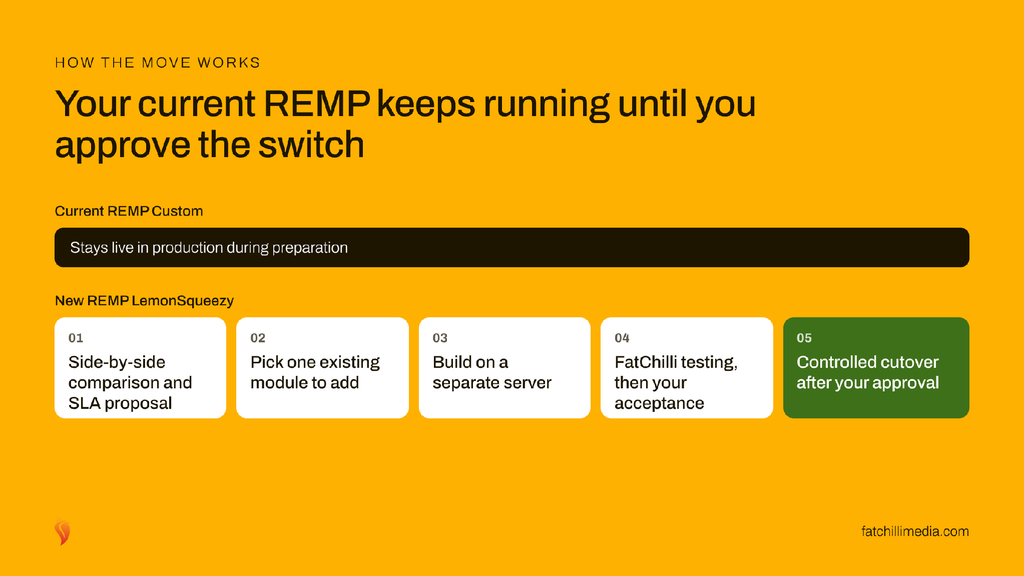
Where REMP goes from here
REMP LemonSqueezy builds on five years of work with publishers. Good custom features become reusable modules, recurring issues are solved once for everyone, and maintenance becomes a planned product process.
Our aim is simple: to spend our time improving REMP for every publisher, not maintaining the differences between installations.
Tomáš Veress, CTO, FatChilli
Enjoyed the post? Share it.

FatChilli helps publishers turn audiences into revenue.











FatChilli's Solutions