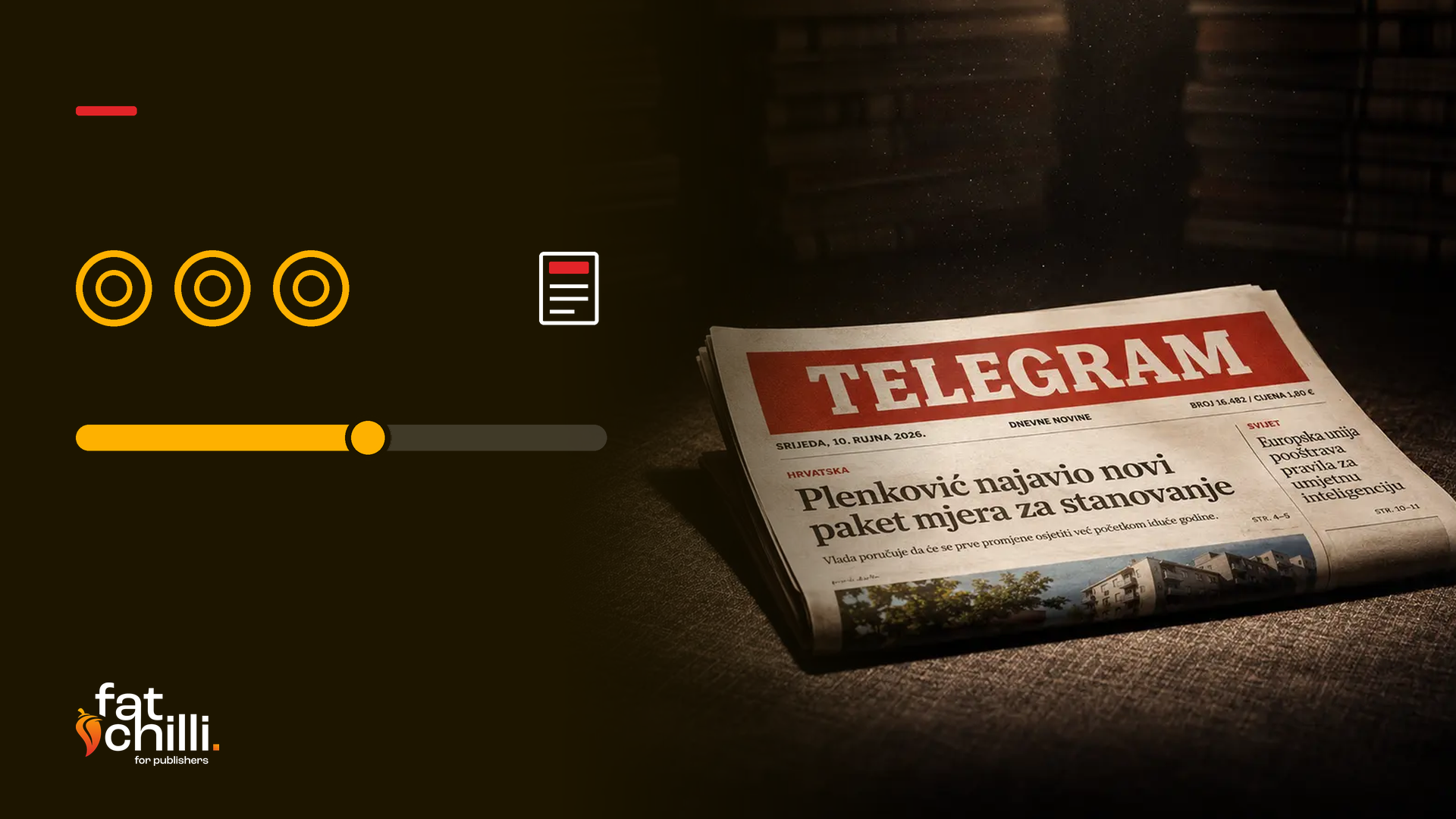

Croatia’s Telegram.hr is asking readers to pay up front for a six-day newspaper that doesn’t exist yet. The checkout, the subscriber data, and the on-site campaign all run on the reader revenue stack it already uses.
Most publishers testing a new product have two bad choices. They can build it first and hope people pay, or they can run a survey and hope people meant what they said Telegram.hr chose a third option.
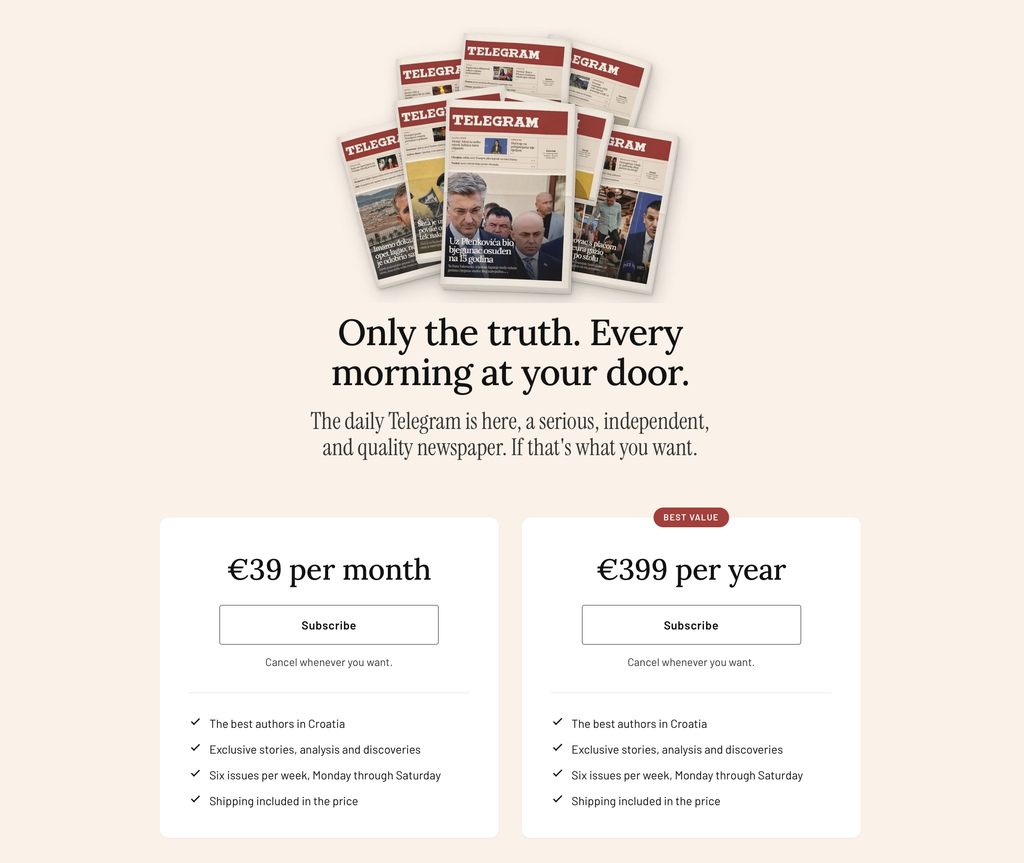
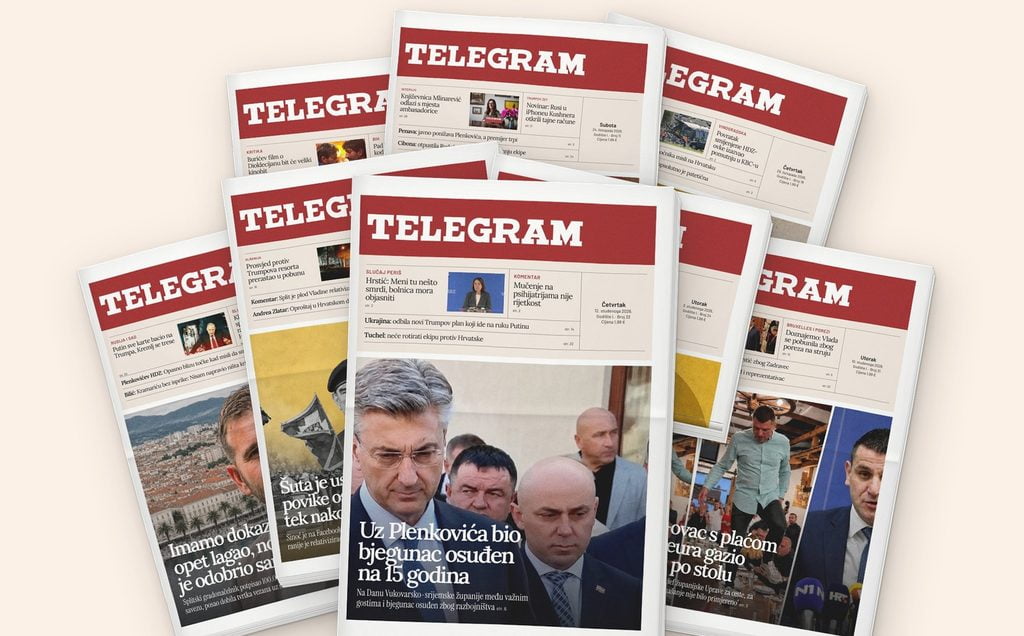
On November 13th, it opened a 30-day crowdfunding campaign for a daily print edition. If enough readers subscribe, the outlet launches a Monday-to-Saturday paper, with home delivery included. If they don’t, everyone gets their money back.
The price is €39 a month or €399 a year. Halfway in, the campaign had crossed 60 percent.
“Ninety percent of people in the newsroom thought this was just crazy and that no one would pay,” says Miran Pavić, CEO of Presshaus, Telegram.hr’s parent company. “But after a couple of days we could see that people were actually paying for the annual package. It’s €400. It’s quite a lot.”
Why print, and why now
Croatian dailies sold 20.8 million copies in 2025, 14 percent fewer than the year before. Pavić knows the market is shrinking. His case rests on three things.
Subscribers kept asking for print, and a one-off special edition two years ago sold out, along with its reprint. The open web feels less reliable every year, so Telegram.hr wants more products readers pay for directly.
And AI made the production software cheap. Instead of licensing a system to sit between the web CMS and InDesign, the team built its own with Claude Code.
“The newspaper is still completely done by humans,” Pavić says. “But in creating the system and the small tools that make this more efficient, AI was really important.”
The costs are mostly printing and distribution, because the journalists, brand, and audience already exist. “Even with a couple of hundred copies sold per day, you can break even,” he says. “If you get two thousand, three thousand, you can be quite profitable.”
📩 Subscribe to our newsletterfor more publisher stories and strategies straight into your inbox.
The crowdfunding runs on REMP
Telegram.hr didn’t build a separate crowdfunding page or sign up for a pledge platform. The campaign runs entirely on REMP, the open-source reader revenue platform it already uses for digital subscriptions.
Print was added as a new product in REMP’s CRM. Sign-ups, payments, gift purchases, and delivery addresses go into the same customer records as Telegram.hr’s digital subscribers.
The refund promise is handled through the same payment setup. The only new software Telegram.hr had to build was the layout and article management system for the print paper.
Promoting the campaign on the site runs through REMP Campaign, the module for banners and on-site messaging. Its campaign tools were already Telegram.hr’s most effective acquisition channel during the 10th anniversary drive in 2025, which brought in 3,209 new subscribers against a goal of 3,000.
The print campaign reuses that setup, aimed at Telegram.hr’s own readers on its own pages, with no ad spend.
That’s how, after months of testing and experimenting, the team could launch in days, because nothing new had to be procured or integrated.
Related articles
One CRM, so you can see who’s buying
Because print and digital subscribers share one CRM, Telegram.hr can see who is backing the paper.
About 70 percent of print subscribers already have some kind of Telegram.hr subscription. Some are buying for someone else, which shows up in the delivery addresses: a son subscribing for a parent, for instance.
The other 25 to 30 percent are new to Telegram.hr. “Some people are not that digitally savvy,” Pavić says. “For them it was really important to be able to get something at home.”
Those new print readers are now in the same CRM as everyone else. That gives Telegram.hr a way to reach them later with digital offers, books, or events.
The same setup makes the next product cheap to add. Readers have already asked for a PDF or e-reader edition. “Whatever we think of, we can just create in one day with Claude,” Pavić says, “and set it up so it connects directly to REMP.”
What other publishers can take from this
The print subscription isn’t bundled with digital access. “Because of the cost of distribution, printing and paper, they have to pay for the print edition itself,” Pavić says. The target was set well above break-even, so the paper can survive readers dropping off during the year.
He doesn’t expect print to last forever. “We know this is not a bet for the next five or ten years. But for the next couple of years, it could become a substantial contributor to the newsroom.”
The broader lesson isn’t really about print.
When subscriptions, payments, and on-site messaging already run on one system you control, a new product becomes a cheap experiment. You add it, promote it to the readers you know, and let them decide.
“It’s crazy that we are even talking about this in 2026,” Pavić says. “But we are. And people are pledging.”
A longer version of this story was first published onThe Fix.
Enjoyed the post? Share it.

A journalist, podcaster and audience development strategist interested in the business of news.







FatChilli's Solutions